

Polki vs Kundan vs Jadau
A working definition, before we go further.
Sunita Shekhawat · 1 September 2026
The Modern Meenakar · Founder, Museum of Meenakari Heritage
Updated 29 September 2026
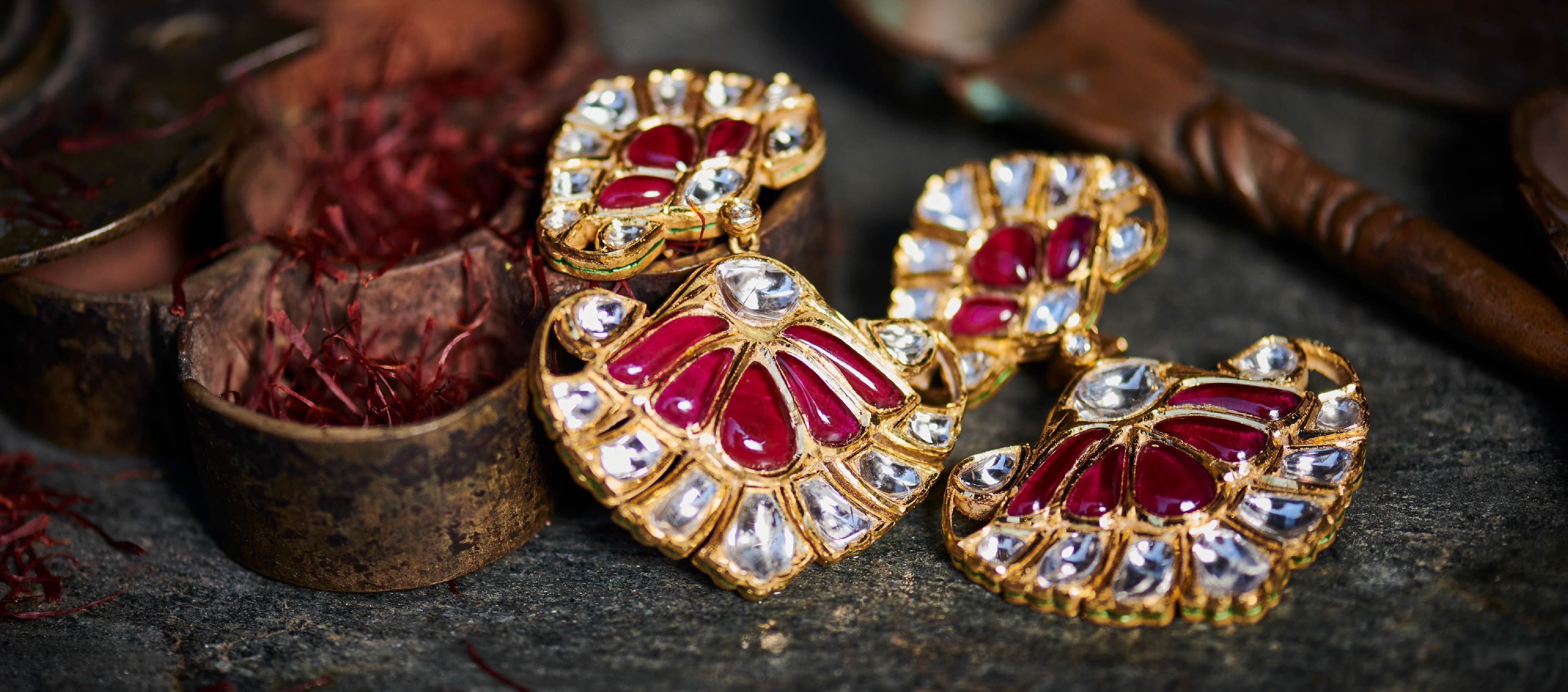
Polki names the stone, kundan names the gold, jadau names the craft of embedding. Polki is a natural uncut diamond, kept close to the form in which it left the earth. Kundan is gold refined to near-total purity, worked into a foil that holds the stone. Jadau is the technique that embeds one into the other. Three words, one jewel, seen three ways.
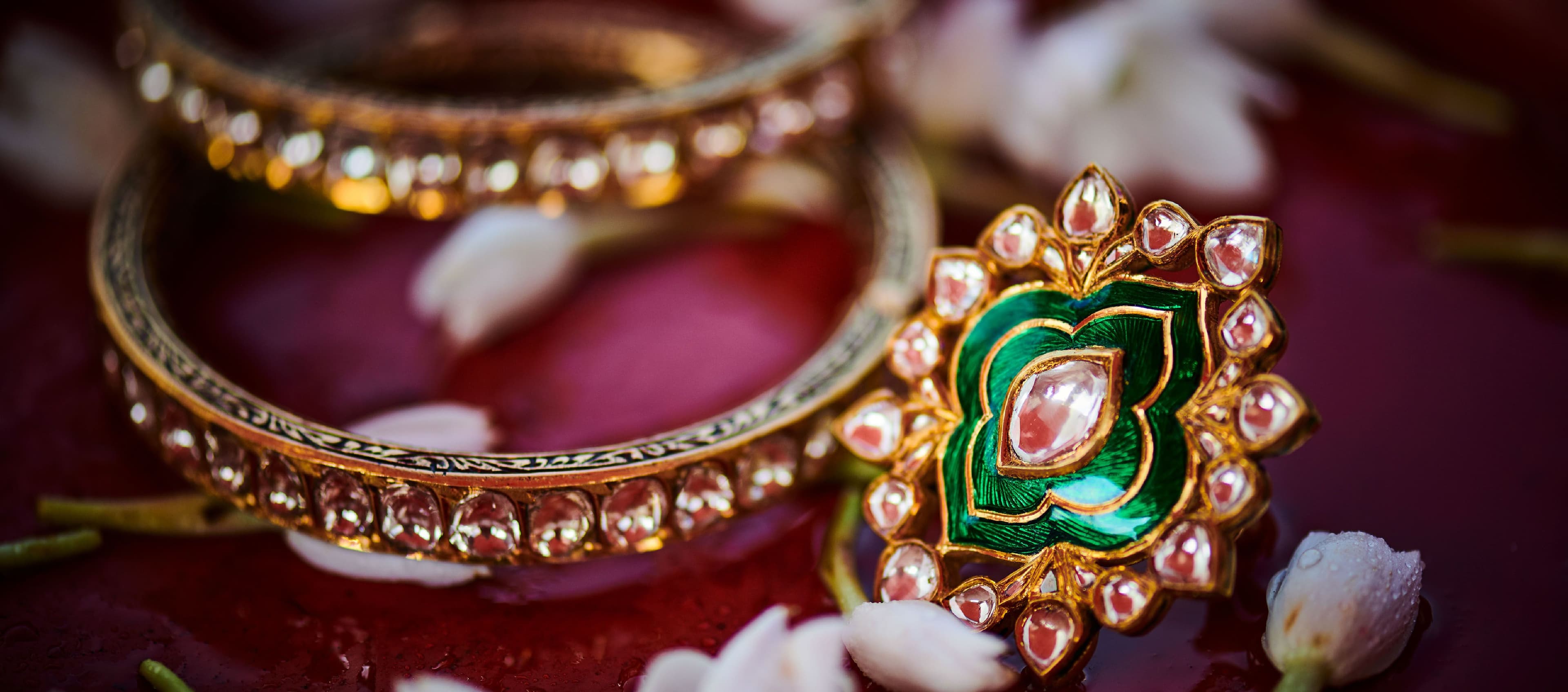
The trouble with these three words is that they are almost always heard together, and almost never explained. A bride choosing her wedding set will hear all three in a single conversation, often describing the same necklace. The confusion is reasonable, because the words do describe the same necklace. They simply answer three different questions: what is the stone, what holds it in place, and how was the whole made. The difference between kundan and polki is a difference of role: one names the gold, the other names the stone.
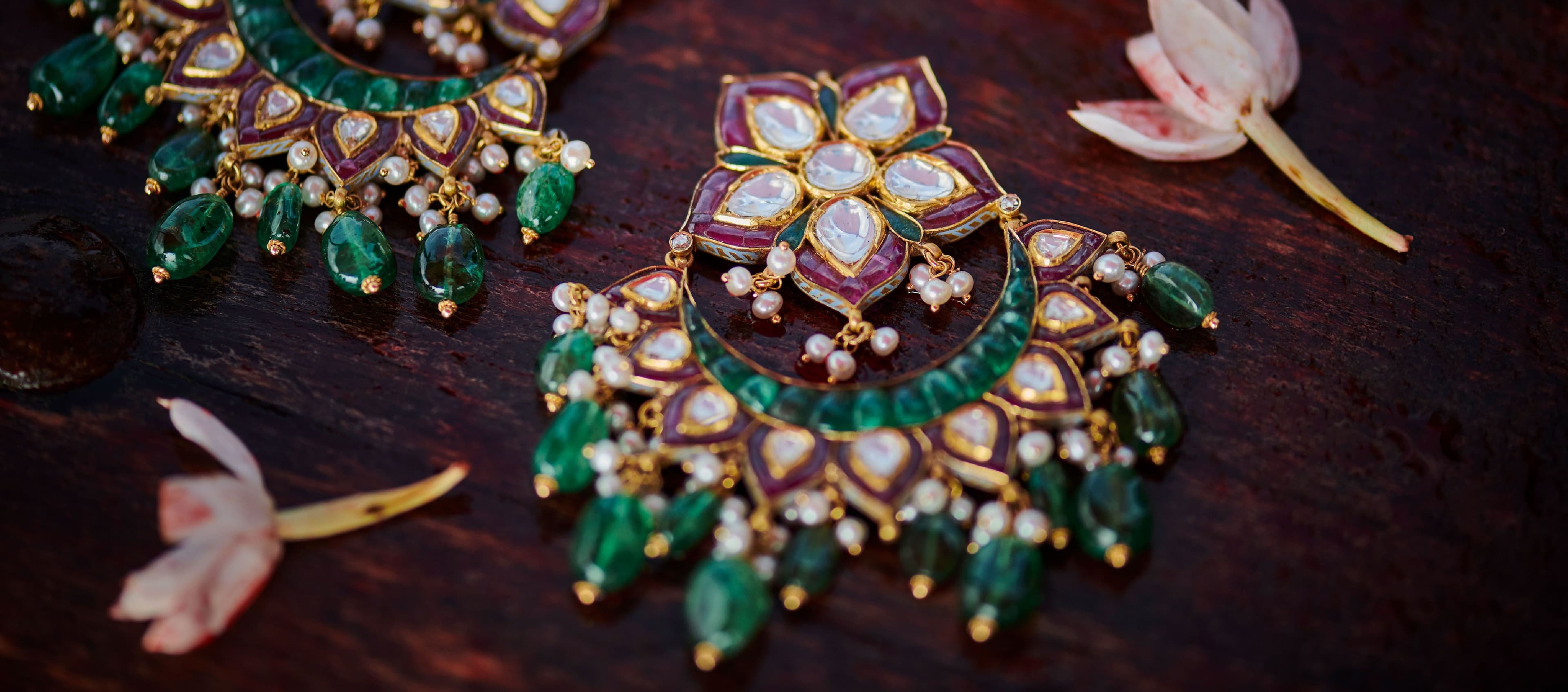
This guide takes each in turn, in the order the jewel itself would. The stone first. Then the gold. Then the craft that binds them, the history behind all three, and an honest account of how to tell a real polki from everything sold in its name. The House of Sunita Shekhawat has worked these crafts in Jaipur since 1996. What follows is the vocabulary of its bench.
The Three Terms at a Glance
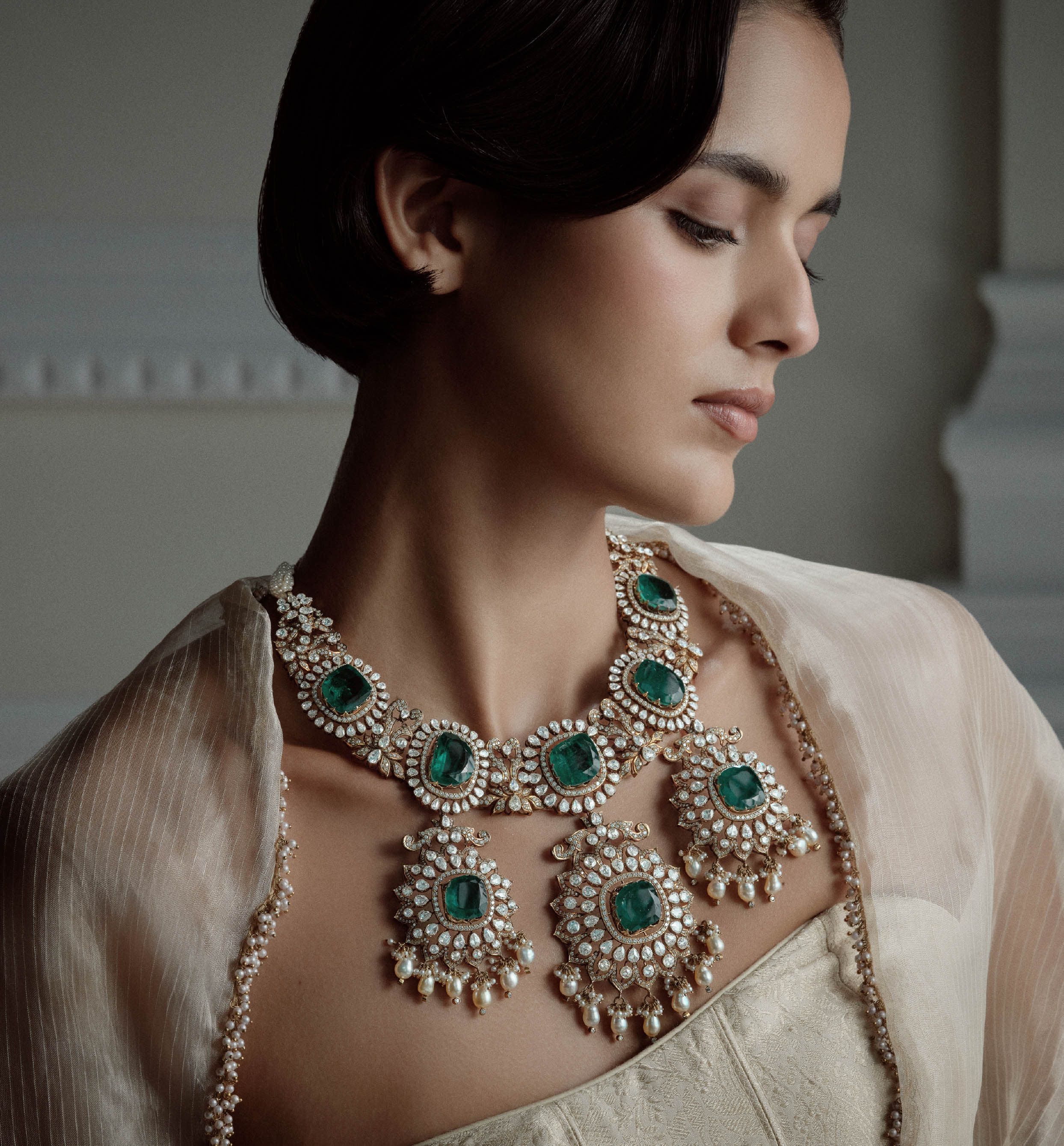
One necklace can be described truthfully by all three words. The stone at its centre is polki. The bright gold pressed around each stone is kundan. The technique that embeds stone, foil, and enamel into a single body is jadau. The table below is the shortest honest version of the whole subject.



Keep the first row. It resolves nearly every confusion the trade has attached to these words, including the most common one: kundan is not a stone, and it never was.

Polki, the Stone
A polki is a diamond that was never fully cut. GIA's field report from the workshops of Jaipur, published in 2016, defines polki as uncut diamonds, or diamonds fashioned to resemble uncut diamonds. The definition is brief because the stone is honest. A polki keeps the character of the rough: no facets at all, or only a handful, fewer than eight. A full-cut round brilliant carries fifty-eight. That count is the first thing the eye reads, and the first thing the loupe confirms.
The polki is not primitive; it is early. Writing in GIA's journal Gems & Gemology in 2019, Gagan Choudhary of the Gem Testing Laboratory in Jaipur described the polki as a flat-cut diamond that is a simple and ancient form of today's rose cut. The rose cut is the polki's descendant, not its rival. Most commercial-quality polkis are fashioned from naturally flat rough, twinned crystals the trade calls macles, or from the flat chips left when larger crystals are cut. Many carry fine natural fissures that open on the surface, which is why the stone is treated gently, and why its setting, as we will see, was designed to protect it.
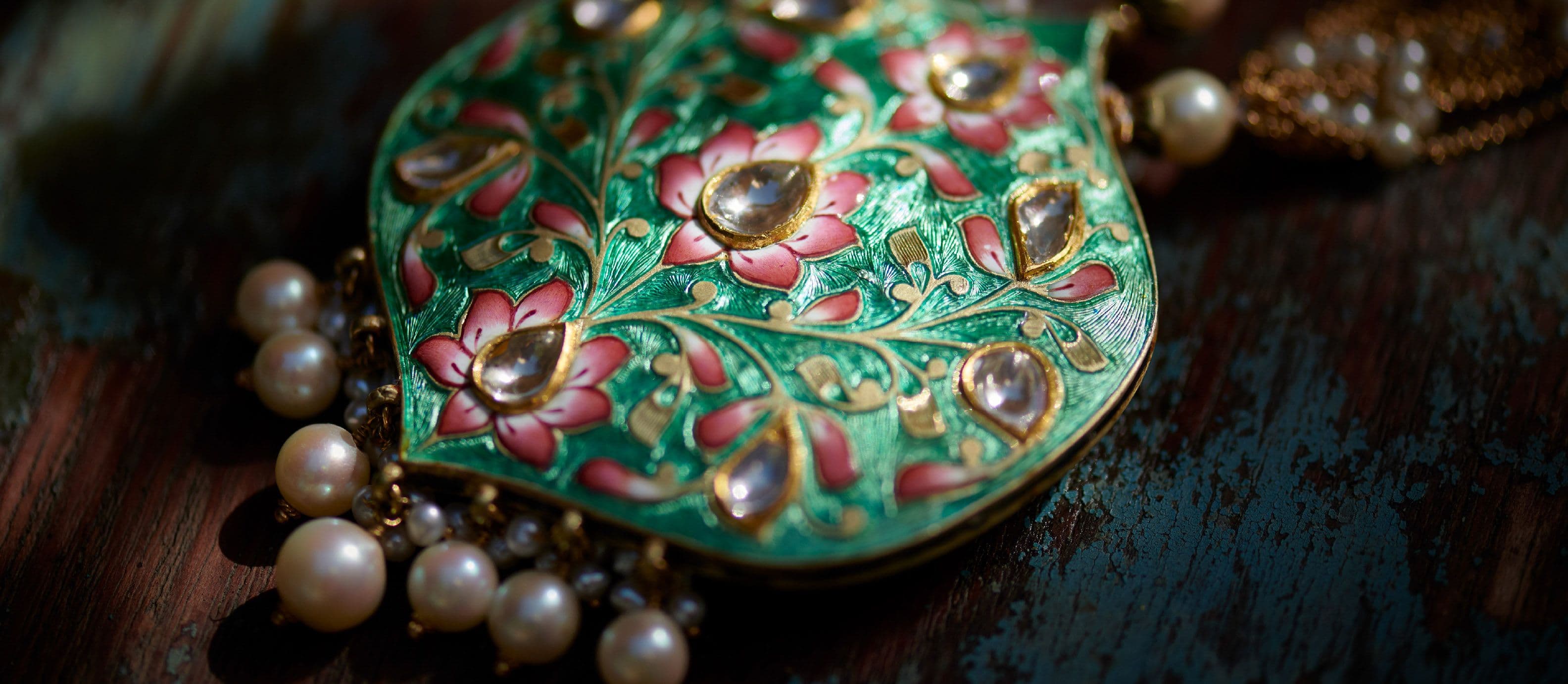
What the polki gives up in fire it returns in temperament. A cut diamond throws light; a polki holds it. The trade speaks of a polki's spread, the breadth of the stone across the face of the jewel, and of its water, the old word for the limpid clarity that lets light sink into the stone and rise back slowly. Because no two pieces of rough are alike, no two polki are alike.
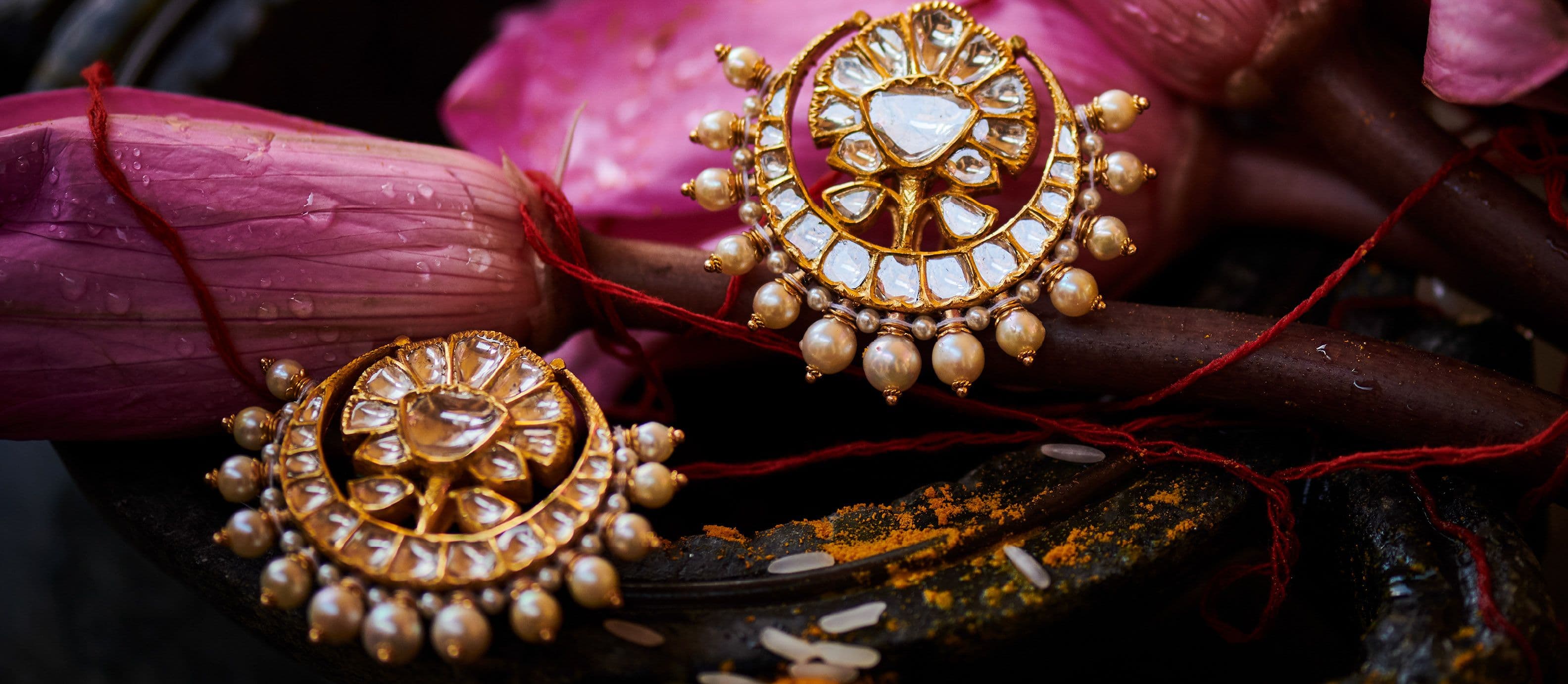
The House's own description of its uncut diamonds calls the effect a raw, portrait-like charm, and the phrase is exact: each stone has a face. Beneath every polki in a traditional jewel sits a small architecture the wearer never sees: silver foil, shaped into a miniature pavilion, returning depth and reflection to a stone that has no cut pavilion of its own. That architecture belongs to the crafts described next.
Kundan, the Gold
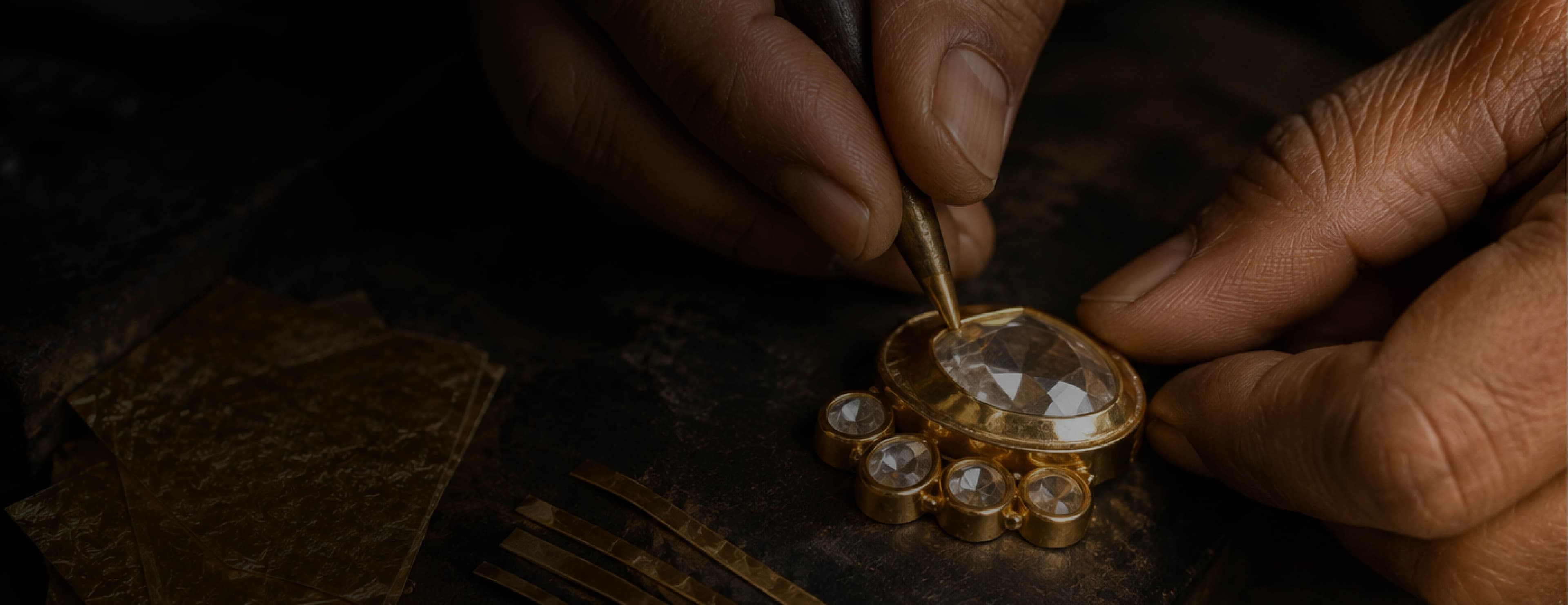
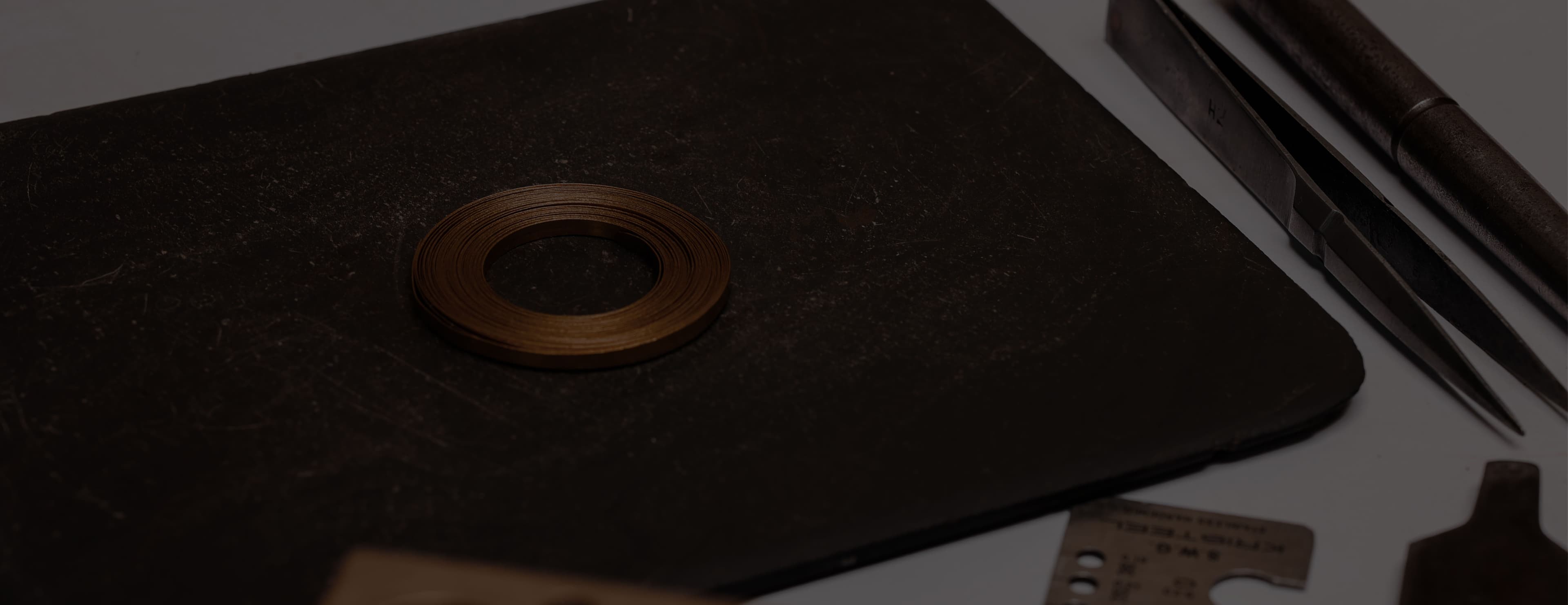
Kundan names gold at its most refined. The Victoria and Albert Museum describes kundan work as the setting of stones with tiny strips of highly refined gold. Christie's, cataloguing its Maharajas and Mughal Magnificence sale of June 2019, is more precise still: gold raised to full purity, hammered into sheets of extreme thinness, cut into small strips, and pressed into place. At that purity, gold has a property no alloy shares. It bonds to itself at room temperature, molecule to molecule, without heat and without solder.
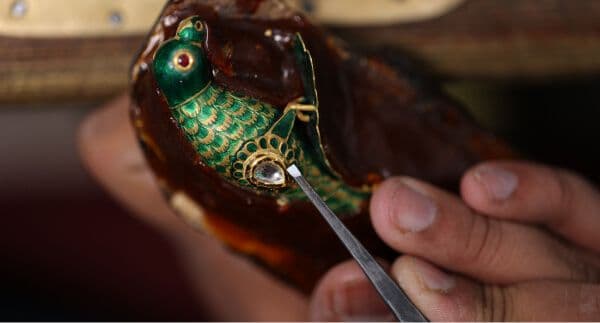
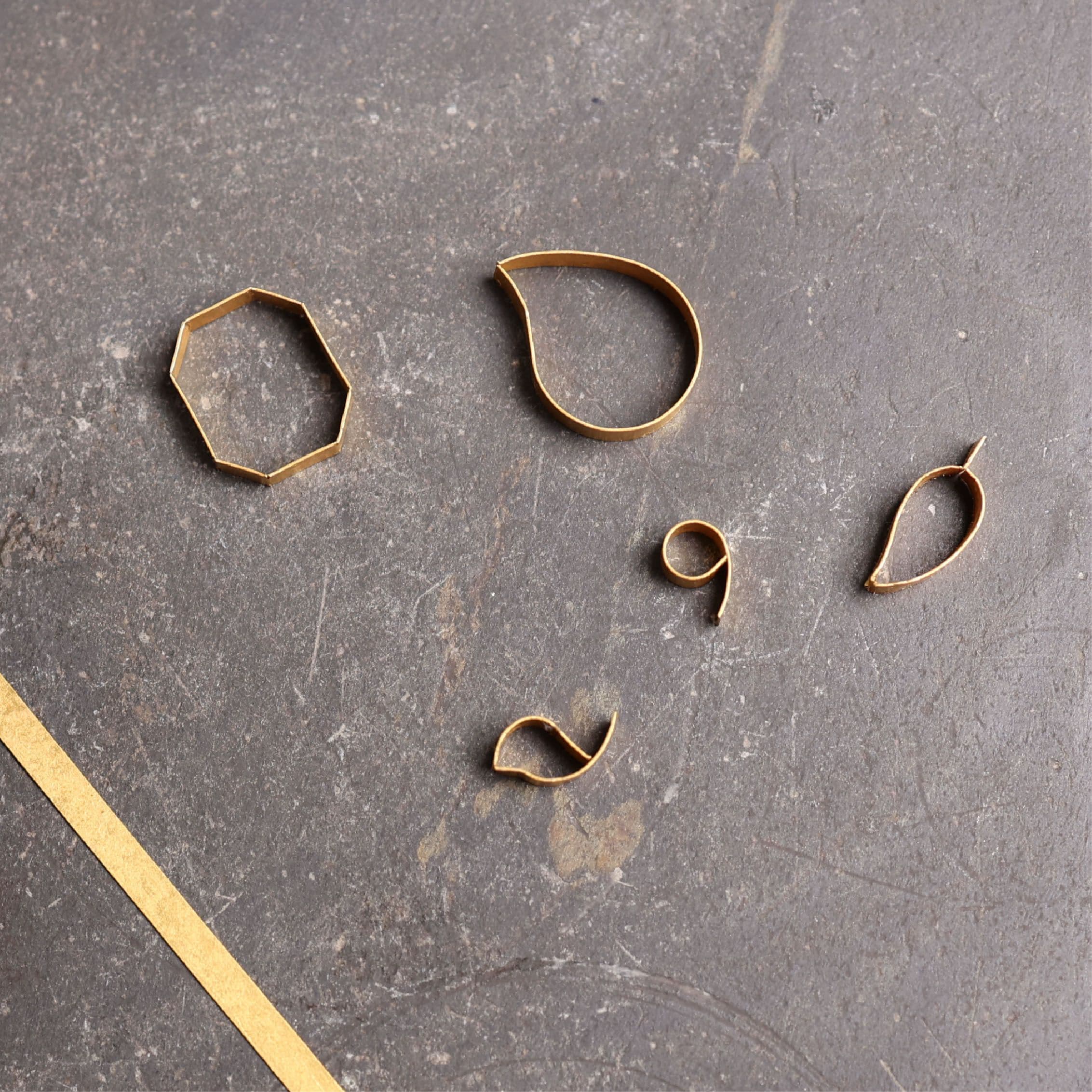
This is what makes the technique singular. Because nothing is heated, kundan can set precious stones of any size or shape into designs of great complexity, and into surfaces no flame could approach: fragile enamel, engraved hardstones, nephrite jade, rock crystal. The Metropolitan Museum of Art describes the mechanics plainly: gold drawn into wire, beaten into flat strips, folded into ribbons, and compressed into a solid wedge around the gemstone, holding it fast. There are no prongs in a kundan setting. The polki is held by pure kundan gold foil pressed tightly around the stone, without prongs; artisans shape the foil with fine implements of wood and bone.
“The skill is in the angle and the pressure, and in how well you seal the stone with the twenty-four-karat foil so it sits perfectly. That is the art.” — Digvijay Singh Shekhawat
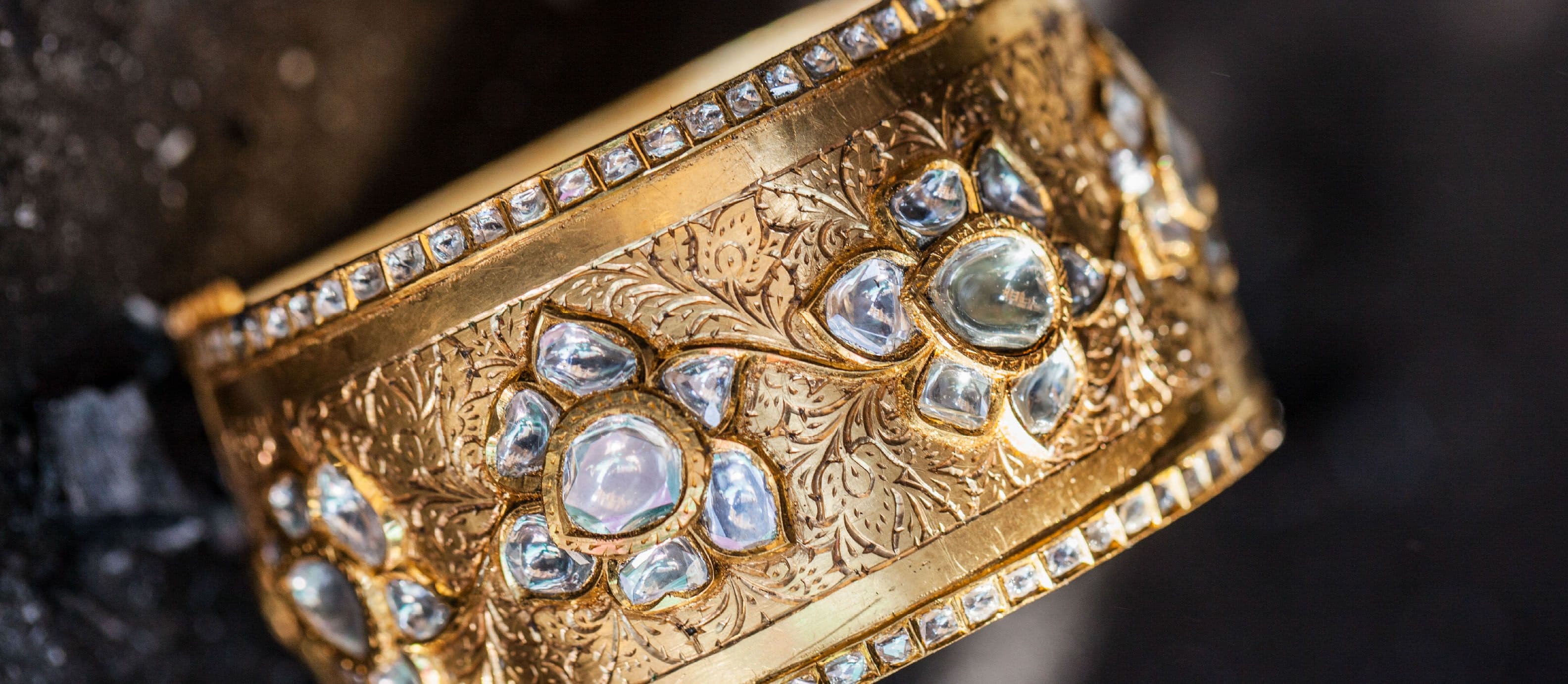
A well-set polki sits flush with the surrounding gold, framed by a hairline of kundan that catches the light. One clarification, offered plainly. Clients, and jewellers who do not specialise in the craft and its language, often say kundan to mean glass-set jewellery: pieces in which shaped glass or imitation stones sit within the same style of gold-foil setting.
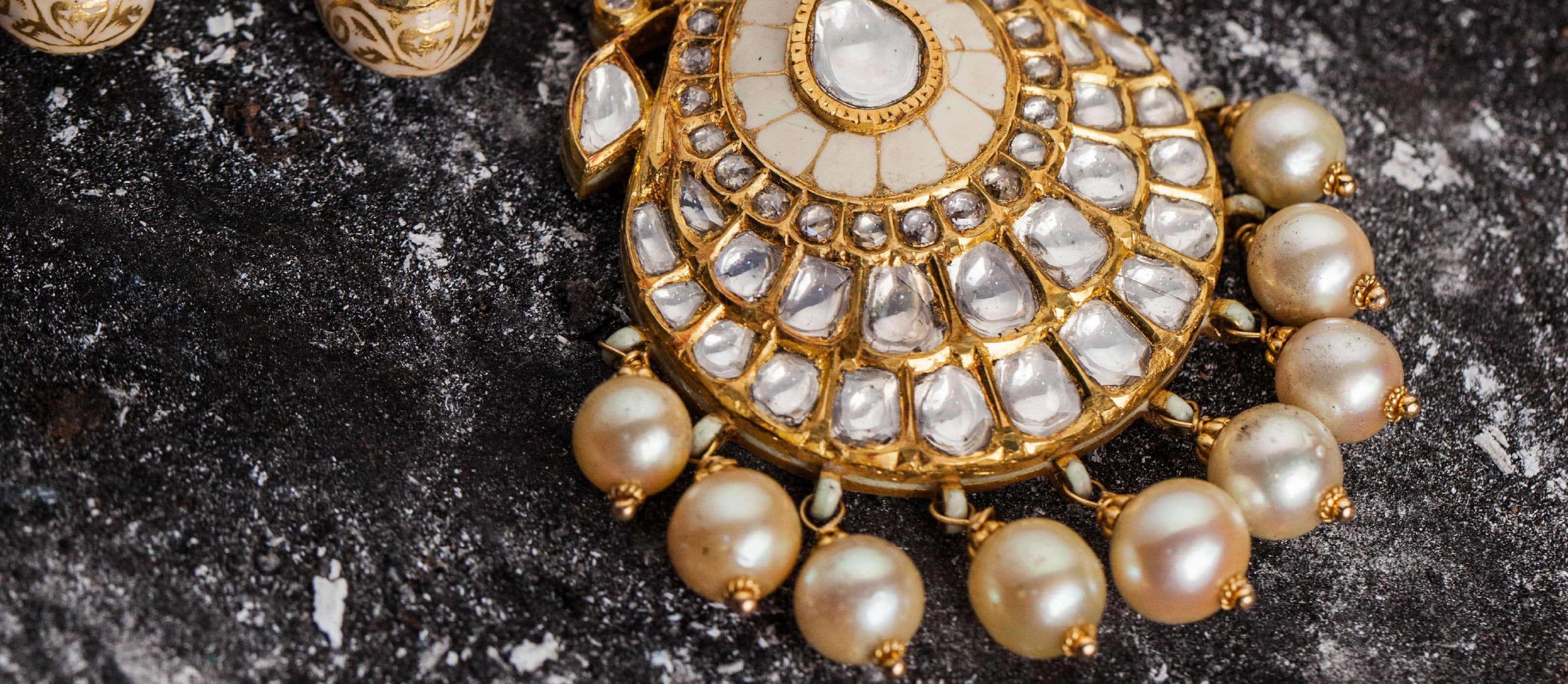
The usage is now simply how much of the market speaks, and there is no fault in it. But the historic meaning is worth keeping. Kundan names the refined gold itself, and polki is always a natural uncut diamond. When the two words are used carefully, no one is misled.
Jadau, the Craft of Embedding
Jadau is the craft that gathers everything above into a single jewel. The Museum of Art and Photography in Bengaluru traces the word to jad, to embed: the technique of setting the gold around the stones in kundan work is called jadau, and by extension the finished jewel is called jadau too. The museum records the craft's four stages, and they survive intact: ghadayi, the raising of the gold framework; khudayi, the engraving; meenakari, the enamel; and jadai, the setting of the stones.
At the House these four crafts work in concert, and a single jewel passes through the hands of seven or eight specialist karigars. The frame is twenty-two-karat gold; the kundan foil that will hold each stone is twenty-four. The order of work is fixed by the kiln: enamelling must be completed before any stone is set, because the kiln's heat can melt twenty-four-karat gold or loosen gemstones. The full sequence is described on the House's Craft and Design pages.
Inside the jewel sits a construction the wearer never sees. The gold frame carries a core of lac, a natural resin, described in GIA's field notes as a heated wax-like substance and recorded in museum captions of historic pieces as gold on a lac core. Into this bed the karigar lays silver foil, indented to form a small pavilion beneath each flat stone. For coloured gemstones the foil may be painted the colour of the stone itself, so the reflection deepens the hue, what the GIA field report calls the art of illusion. Then the polki is laid down, and the kundan is pressed home around it.
The reverse is finished as carefully as the face. In the classical Jaipur manner the back of a jadau jewel carries meenakari; an eighteenth-century necklace in the Metropolitan Museum of Art, probably made in Jaipur (accession 19.111.3), carries red flowers over a white enamel field on its reverse. The enamel is a craft with a grammar of its own, told in full in the House's guide to what is meenakari.
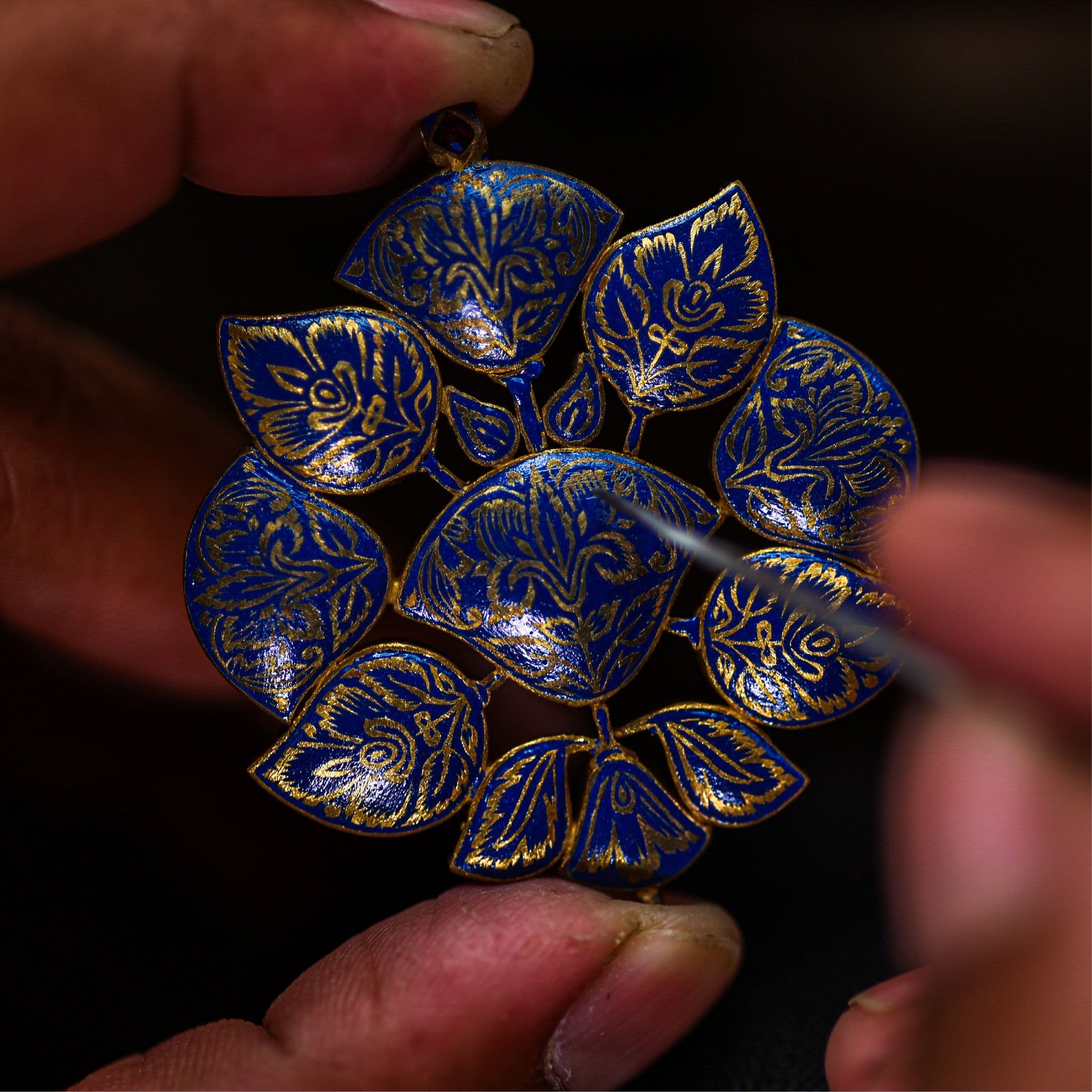
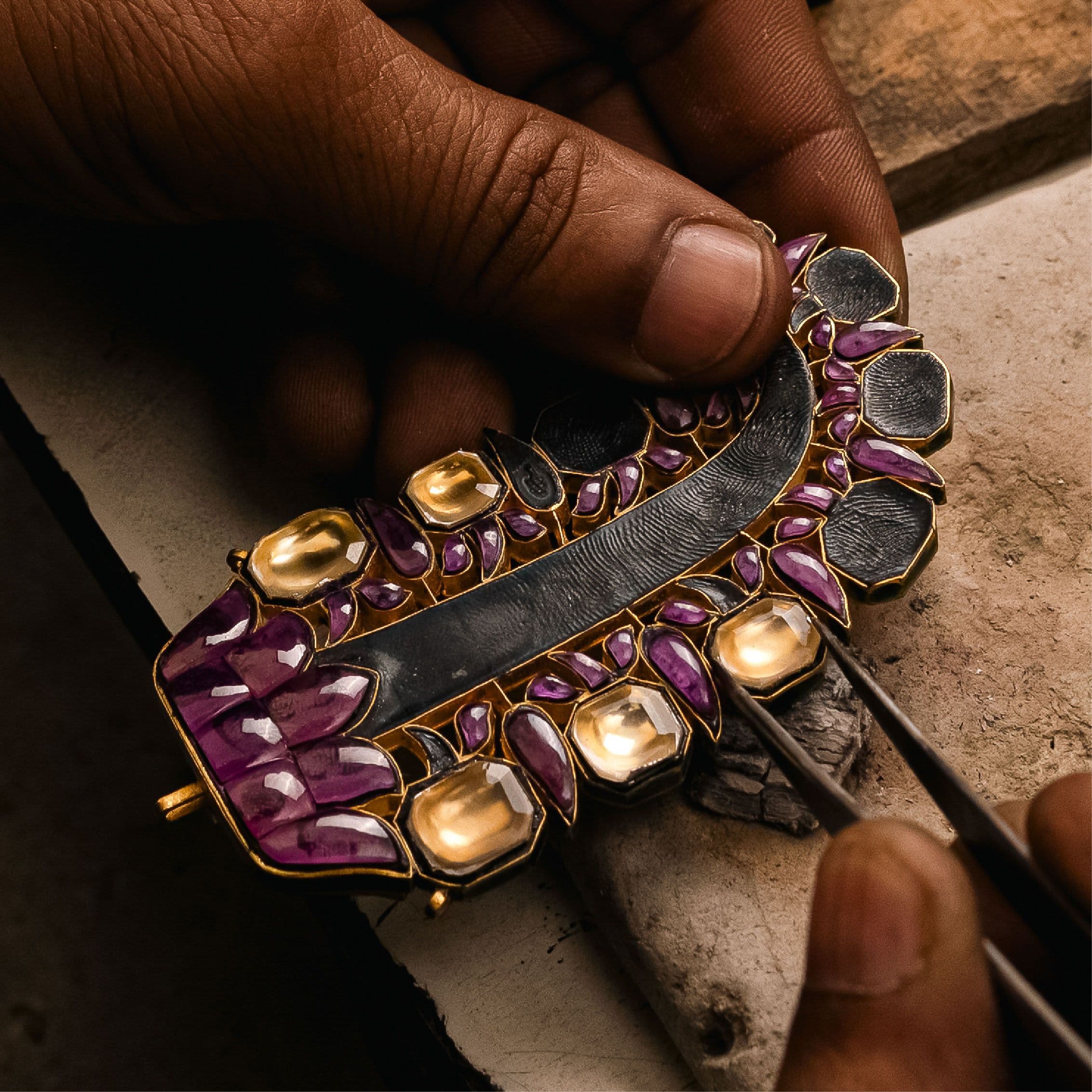
“The reverse of a polki jewel was never meant to be seen. In this house, we have made it the face.” — Sunita Shekhawat, Founder
Older Than the Mughal Court
The Victoria and Albert Museum calls kundan the uniquely Hindustani goldsmith's technique. Abu'l Fazl records it in the Ain-e Akbari, the great administrative chronicle of Emperor Akbar's court, but the museum is careful on the point of origin: the technique has antecedents that predate the arrival of the Mughals by centuries.
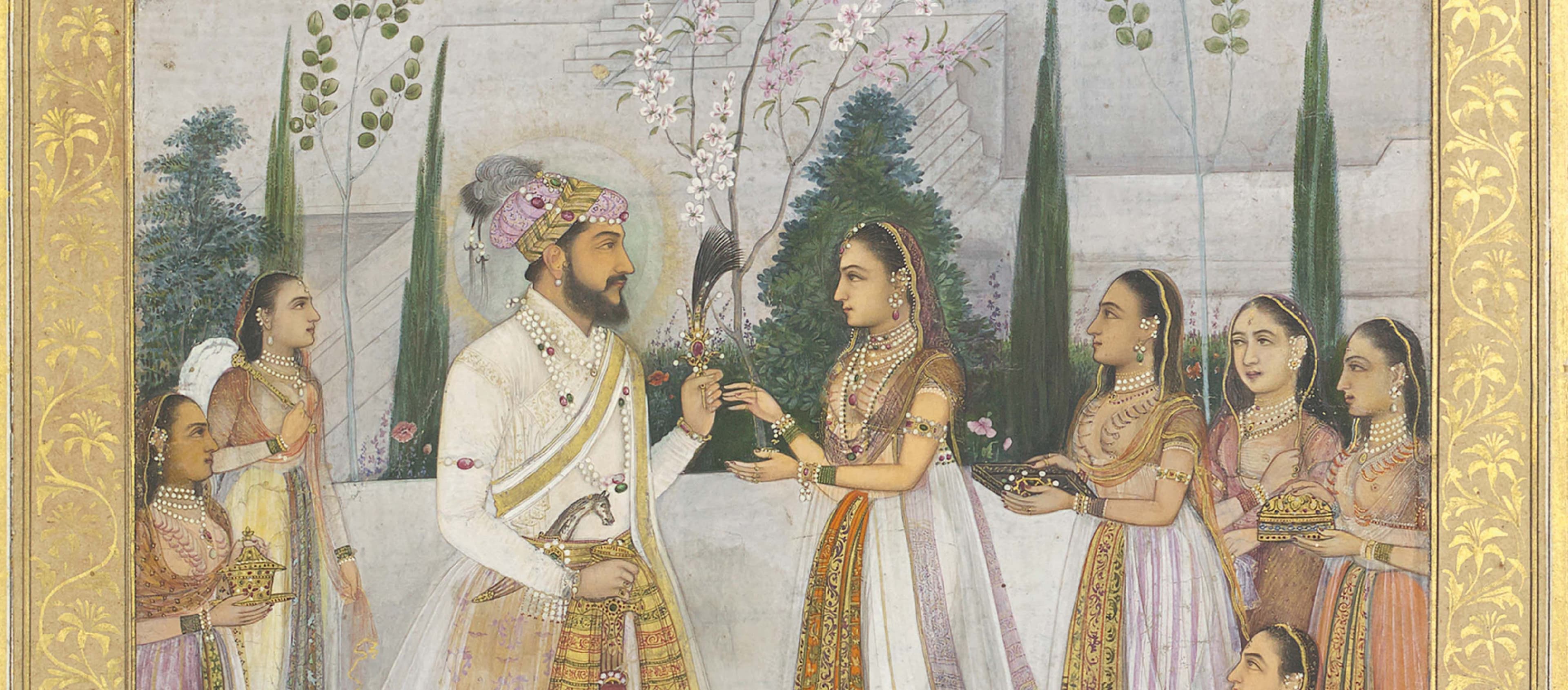
The stones were indigenous too. Long before the Mughal age, the mines of Golconda in the Deccan were giving the subcontinent its own diamonds. The Metropolitan Museum of Art's essay on the diamonds of the Deccan notes that the flat cut was the fashion of seventeenth-century India, and that stones still carrying their historical Indian cut are now extremely rare, because later owners recut them for brilliance and lost carats in the bargain. An indigenous stone met an indigenous setting craft. The Mughal court did not invent that meeting. It refined it, patronised it, and gave it its grandest surviving objects.
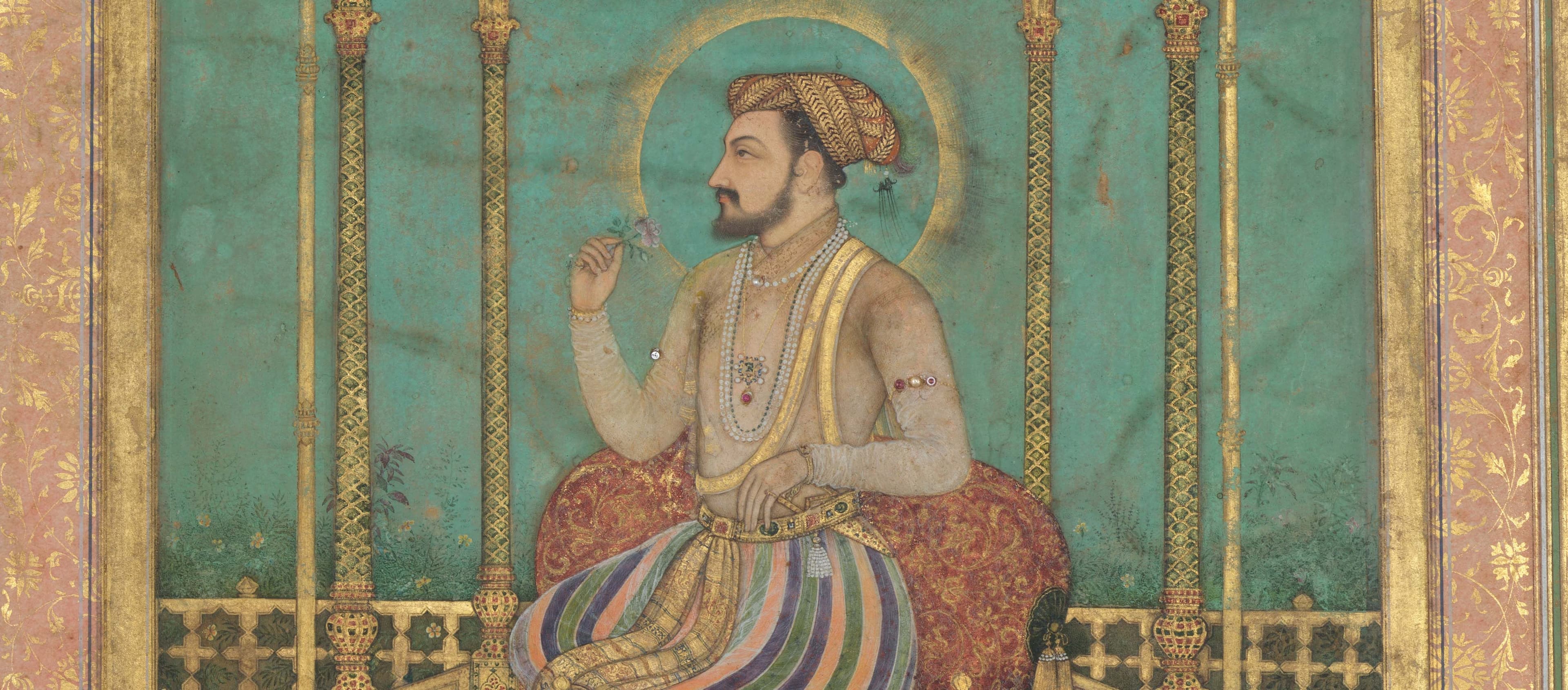
Two of them sit in the V&A. A jade amulet pendant made in Agra around 1610 to 1620, museum number 02535(IS), possibly for the court of Emperor Jahangir, holds rubies and emeralds set in gold by the kundan technique. A royal thumb ring of white nephrite jade, from around 1650, museum number 02522(IS), carries carved rubies and emeralds held by tiny strips of highly refined gold. In the late sixteenth century the court's goldsmiths joined kundan setting to enamelling, finishing the backs of ornaments in colour.
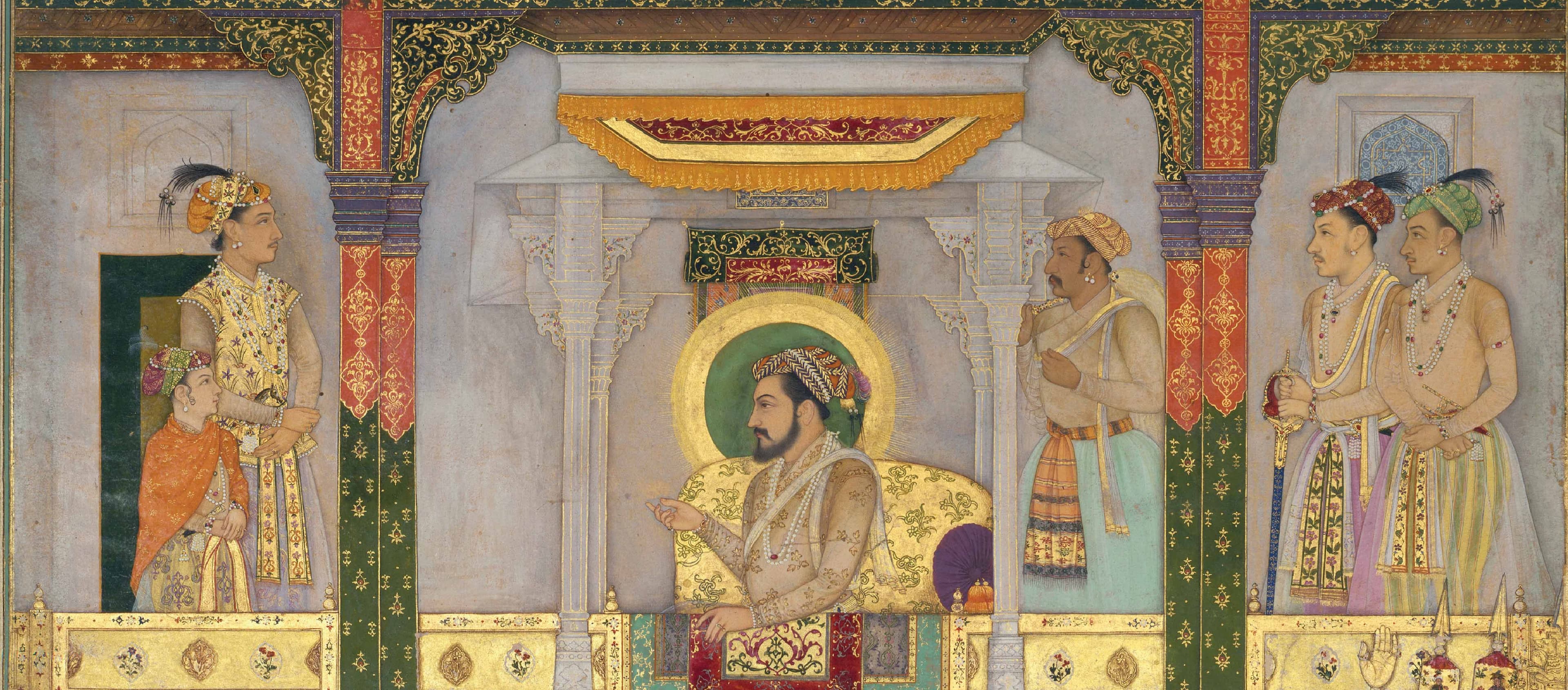
In the same years, enamel artisans from Lahore were drawn into the workshops at Amer, and their craft moved on to the new city of Jaipur, planned by Sawai Jai Singh II in 1727. Each stage of the work belonged then, as it belongs now, to a specialist. The benches simply moved.
How to Identify Real Polki
The question has four honest answers, one for each thing a polki might be confused with.
- Against a cut diamond, count. A natural polki keeps its rough character: no facets, or only a handful, fewer than eight. A full-cut round brilliant carries fifty-eight. The distinction is visible to a patient naked eye and unmistakable under tenfold magnification.
- Against glass, test. Glass is a different material altogether, and it separates cleanly with a loupe or with a refractive index measurement by any qualified gemologist. There is also a subtler practice, recorded by the Gem Testing Laboratory in Jaipur in Gems & Gemology in 2019: natural polkis filled with high-refractive-index lead glass to improve their apparent clarity. Filled stones are diamonds, but they are not what they seem, and the filling should be disclosed.
- Against laboratory-grown diamonds, ask. CVD-grown stones fashioned as polkis exist, and they cannot be caught by eye. The same 2019 report notes that natural polkis usually show triangular or irregular profiles, while a neatly square profile suits the tabular growth of CVD material and warrants laboratory testing. Detection requires specialised equipment. At the House, every diamond passes a natural-versus-CVD screening on dedicated detection equipment before it is accepted for setting.
- Ask for paper. Every piece from this House leaves the atelier with a certificate of authenticity. Wherever a jewel is bought, the questions are the same three: are the stones natural uncut diamonds, have they been glass-filled, and were they screened for laboratory growth. A jeweller at ease with those questions is the first mark of a real polki.
Choosing Between the Three
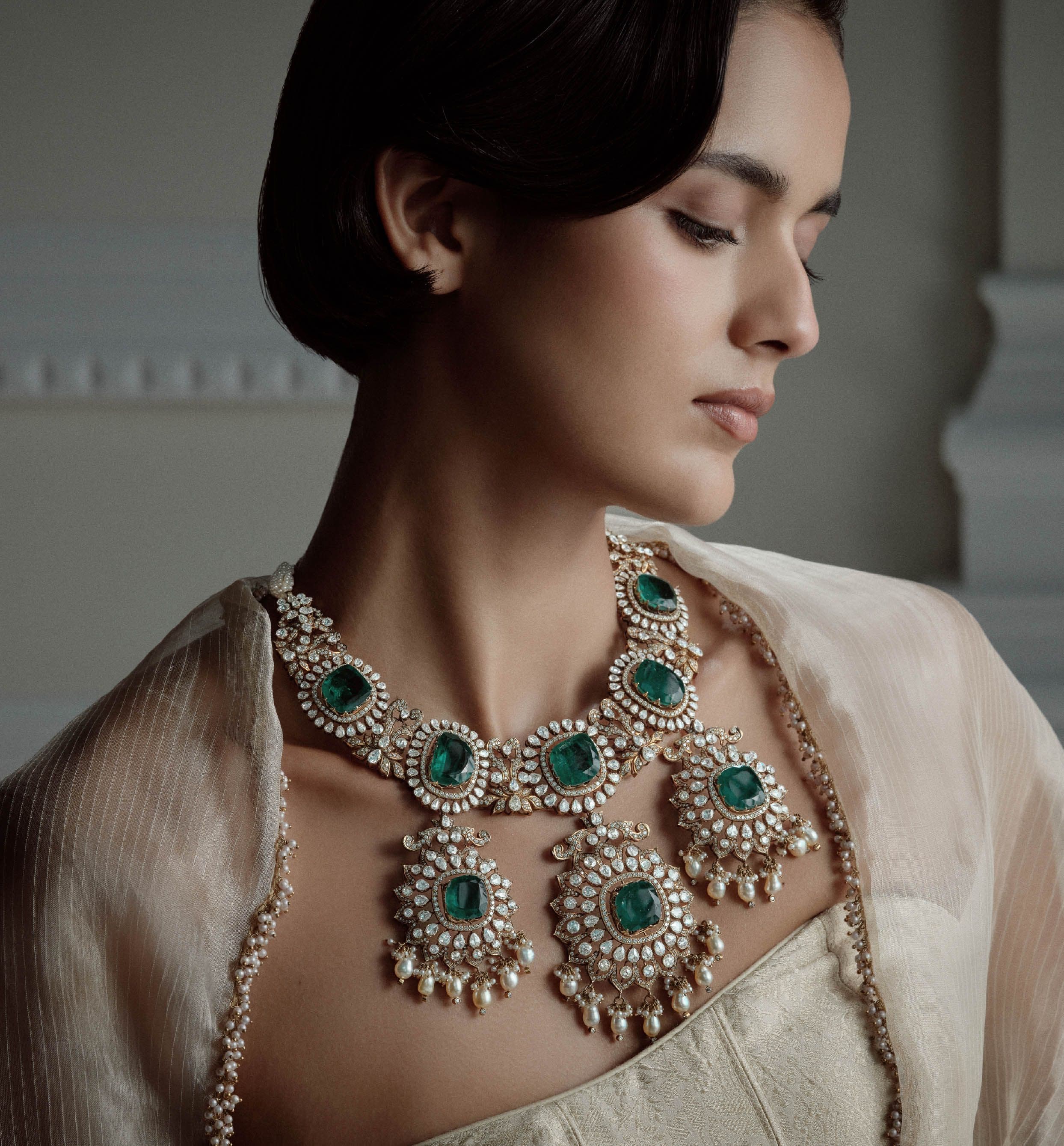
There is no choosing between polki, kundan, and jadau; a fine jadau jewel contains all three. The real choices lie elsewhere. The first is between jewellery set with natural uncut diamonds and glass-set work sold under the kundan name: a question of what the piece is, settled by the checks above. The second, among true polki jewels, is a question of quality, and the measures are old and stable. The worth of a jadau piece follows the spread and water of its diamonds, the weight and purity of its gold, the enamel work on its reverse, and the hours of hand-setting inside it. A piece made well on those four counts is made to be passed down. That, and not arithmetic, is its value.
For a bride, the jadau tradition is at its fullest: sets of necklace, earrings, maang tikka, and haath phool, in polki and meenakari together. Bespoke bridal commissions at the House ask for three to four months, and five to six when they carry rare gemstones, intricate meenakari, or elaborate polki settings. The tradition was never only the bride's: the sarpech, the head ornament pinned to the safa, leads the House's men's jewellery. And for the reader who would rather look first, uncut diamond jewellery takes centre stage across the jadau jewellery of the Heritage collection.
Outside India, kundan is often the first of the three words a reader meets, and it usually arrives attached to glass-set pieces. The vocabulary travels unchanged: polki means a natural uncut diamond wherever the jewel is found.
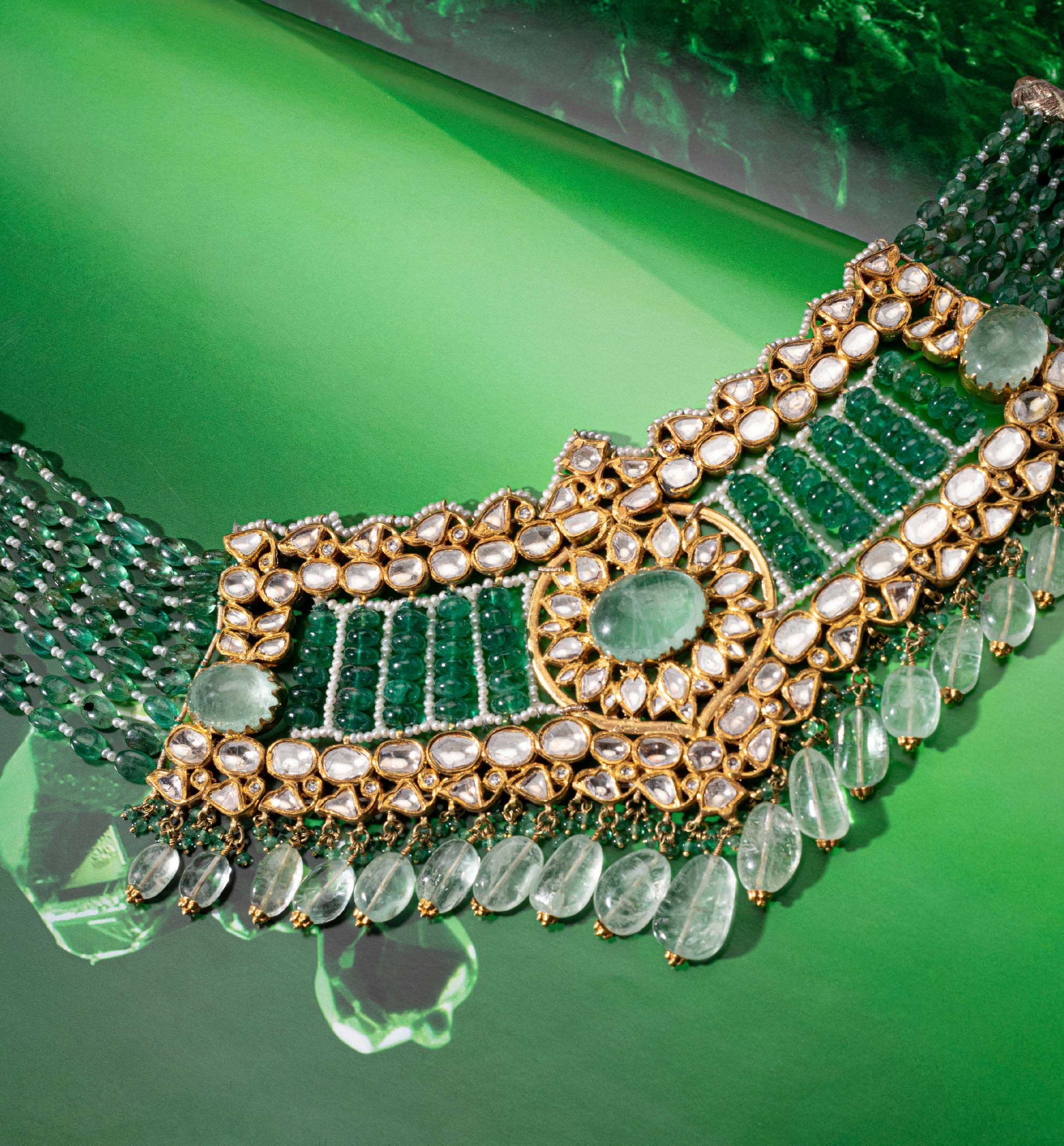
Caring for Polki and Jadau
Polki and water do not meet. Moisture can seep behind the stones and loosen the lac backing that supports them, so the jewels are removed before washing and never cleaned with liquids. A soft, dry cloth after each wearing is the whole of the routine.
Store the pieces flat, in an airtight container, each in its own compartment; adhesive linings can darken polki over time, so a plain fabric-lined tray serves better. Between wearings, kundan and jadau jewellery prefers a dry, padded rest. Perfume goes on before the jewel does. The House's full guidance, including the polki and jadau tab, is on the Care Advice page.
Seeing the Craft in Person
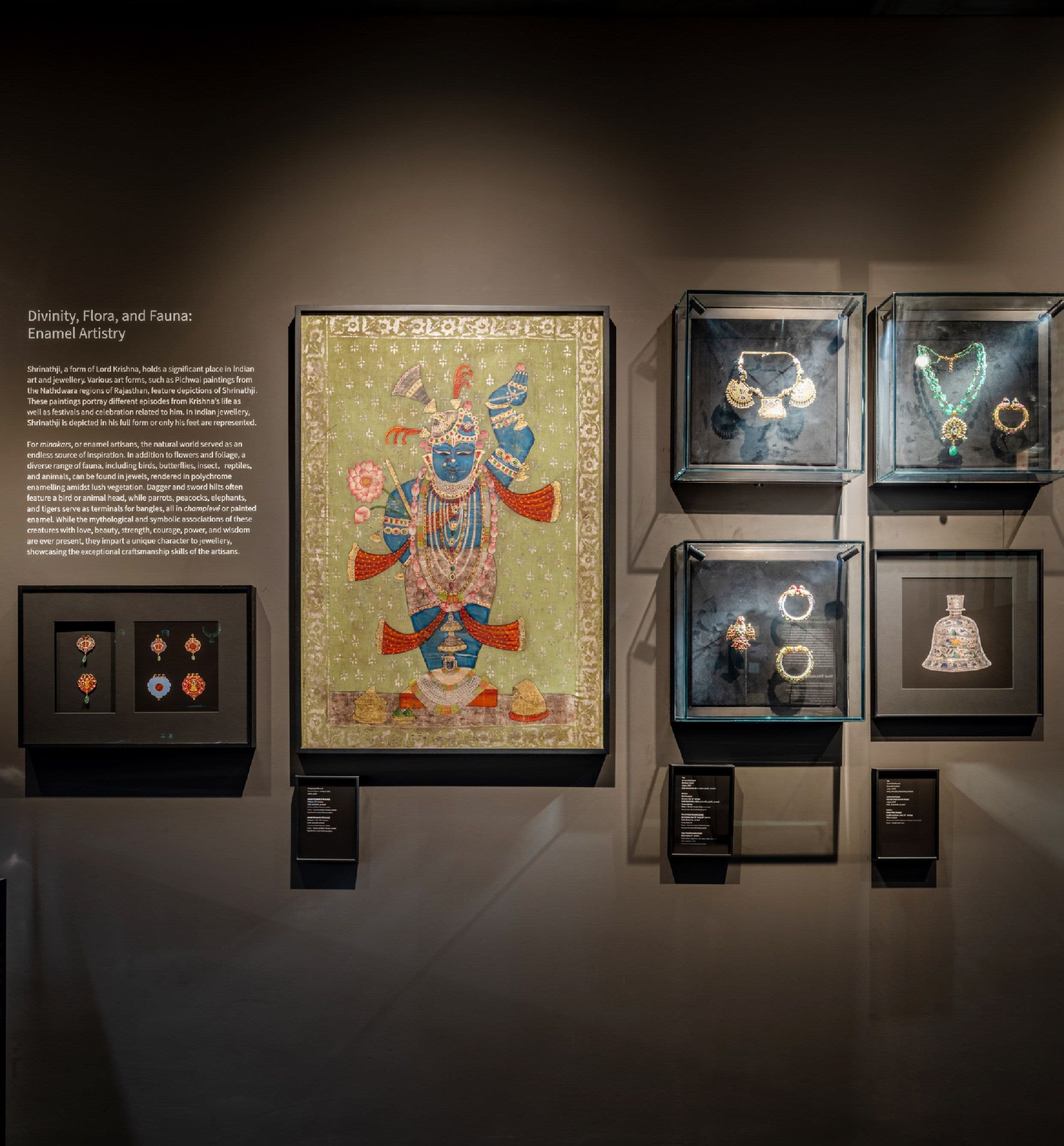
Words carry this subject only so far. The Museum of Meenakari Heritage, the House's permanent gallery near Jaipur's historic walled city, holds the enamelled face of this tradition across more than three thousand square feet: sixty original pieces, commissioned reproductions, and images drawn from more than fifteen institutions, among them the Victoria and Albert Museum and the Metropolitan Museum of Art.
The House has worked in Jaipur since 1996, and a consultation remains the surest way to see a polki's water, a kundan hairline, and a finished reverse at first hand. Visits and consultations are arranged by appointment.
Frequently Asked Questions
People also ask.
A polki jewel is priced above the value of its gold alone. It carries natural uncut diamonds, a twenty-two-karat gold frame, twenty-four-karat kundan foil, often enamel work, and hours of hand-setting. The gold's weight and purity begin the price; the diamonds' spread and water, and the time at the bench, carry the rest.
A well-made jadau jewel is built as an heirloom. Its worth lies in natural uncut diamonds, the purity of its gold, its enamel work, and the hours of hand-setting inside it. It is bought to be kept and passed down; judged on those terms, fine polki holds its place in a family for generations.
No. Kundan is not a stone: it names the highly refined gold foil that holds the stone in place. Polki names the natural uncut diamond itself. In everyday market speech kundan has come to describe glass-set jewellery, which is why the two words are so often confused with one another.
Count the facets first. A natural polki keeps its rough character, with no facets or only a handful; a full-cut brilliant carries fifty-eight. Glass separates under a loupe or by refractive index. Laboratory-grown CVD stones require specialised detection equipment, so ask whether the diamonds were screened, and ask for a certificate of authenticity.
Neither, because they are not rivals. Polki names the uncut diamond and kundan names the refined gold that holds it; a fine jadau jewel contains both. The real comparison is between jewellery set with natural uncut diamonds and glass-set work, and that is a question of material, not of taste.
Jewellery set with natural polki diamonds generally costs more than glass-set work sold under the kundan name, because the stones are natural diamonds and each is set by hand in gold foil. Within polki jewellery itself, price follows the spread and water of the stones, the gold, and the enamel work.
Polki asks for care. Uncut diamonds often carry natural fissures that open on the surface, which makes them more delicate than fully cut stones. Water can seep behind the stone and loosen the lac backing, so the jewels must stay dry, be stored flat, and be cleaned only with a soft, dry cloth.