
Kalgi and Sarpech: The Groom's Turban Jewels
A journey through Mughal courts, Rajput heritage, and the enduring craftsmanship of Jaipur.
Sunita Shekhawat · 10 August 2026
The Modern Meenakar · Founder, Museum of Meenakari Heritage
Updated 29 September 2026
What is Kalgi?
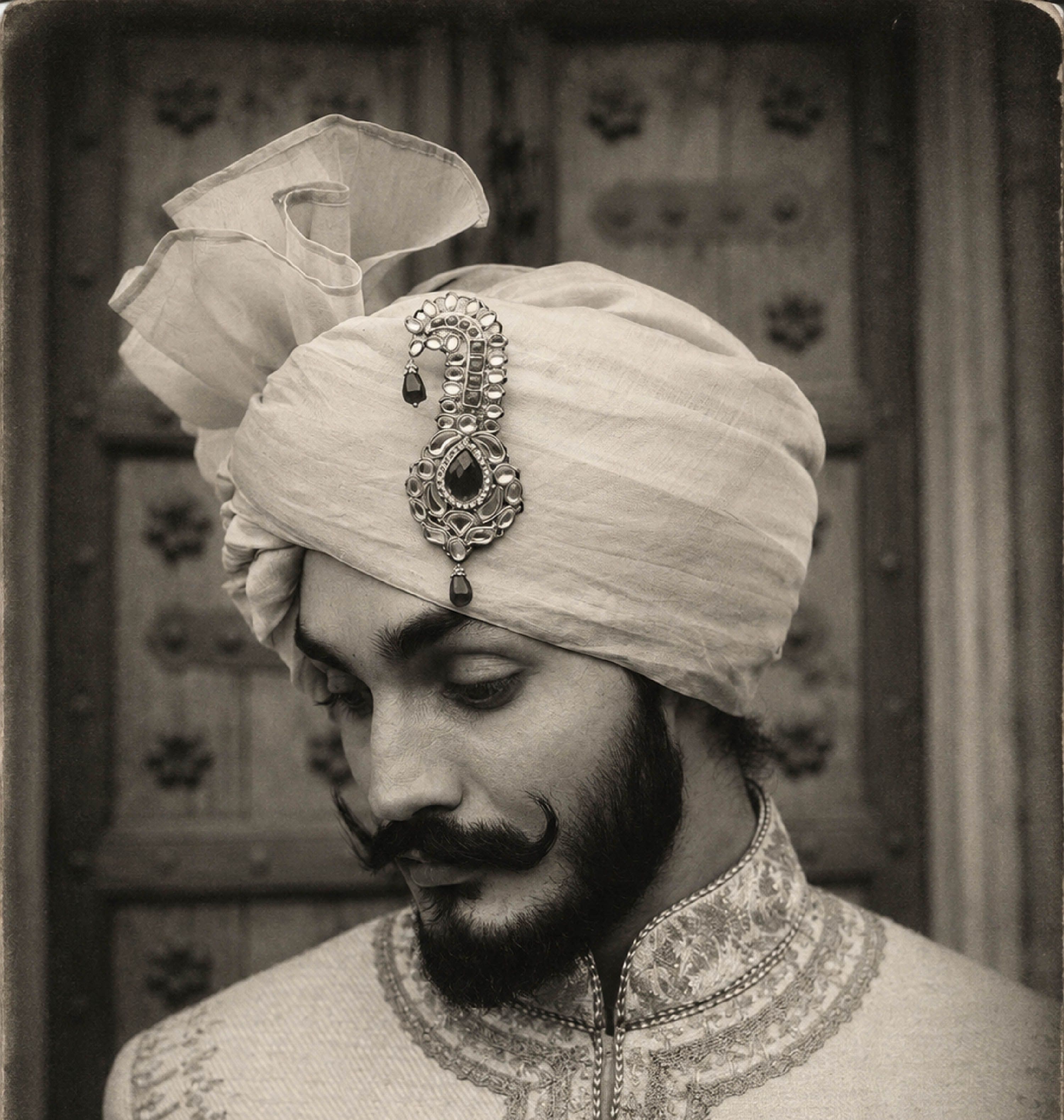
A kalgi (also spelt kalangi) is a turban ornament that carries a feather plume above a jewelled mount, pinned to the groom's safa on his wedding day. The traditional kalgi held prized black heron feathers, their stems bound in gold and silver wire, and for centuries it belonged to royalty and those a court chose to honour.
What is Sarpech?
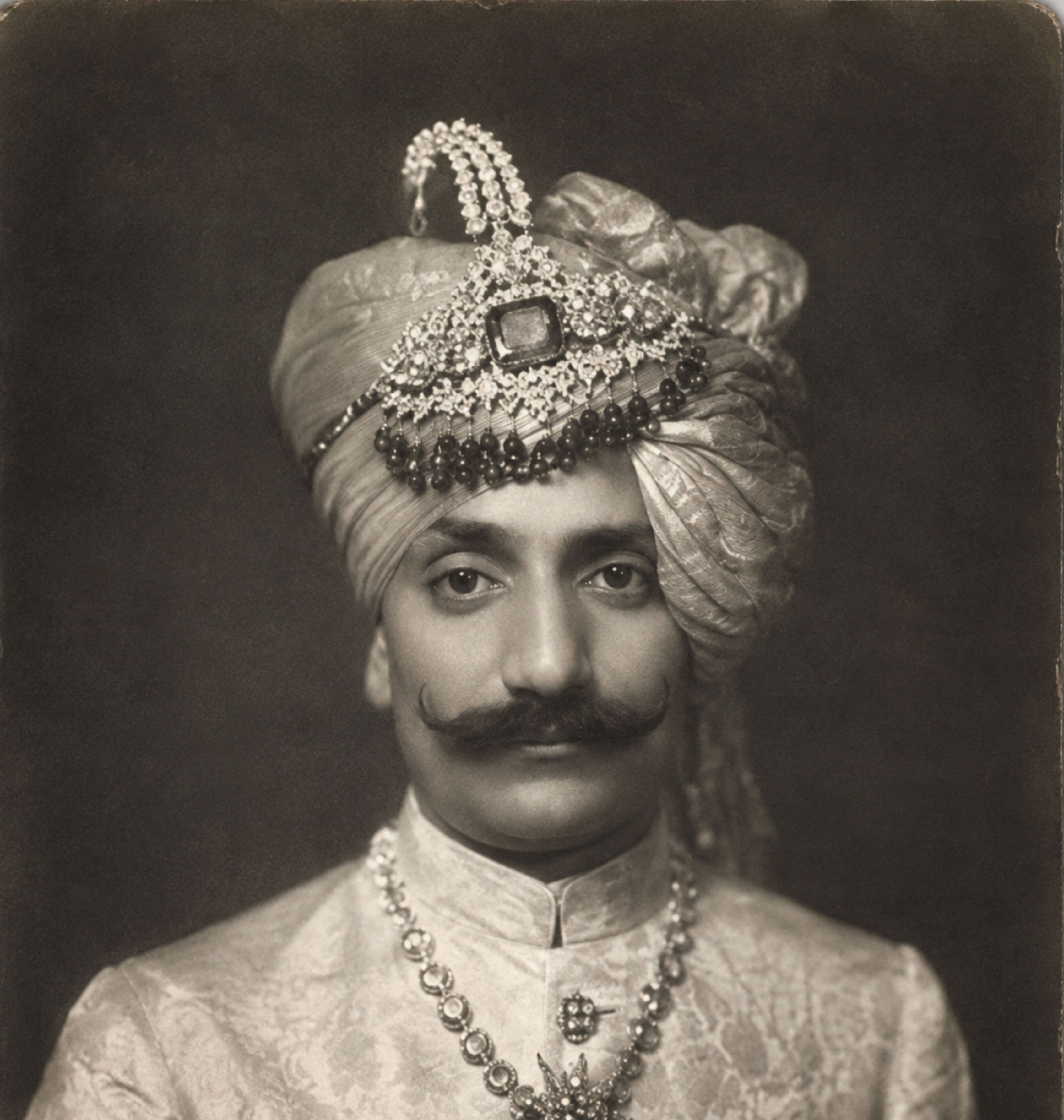
A sarpech is the jewel fastened to the front of the turban. The word joins sar, head or front, with pech, screw: the ornament that fixes onto the turban's front. In the Mughal and Rajput courts it announced rank and royal affiliation. Today it distinguishes the groom.
One Turban, Four Ornaments
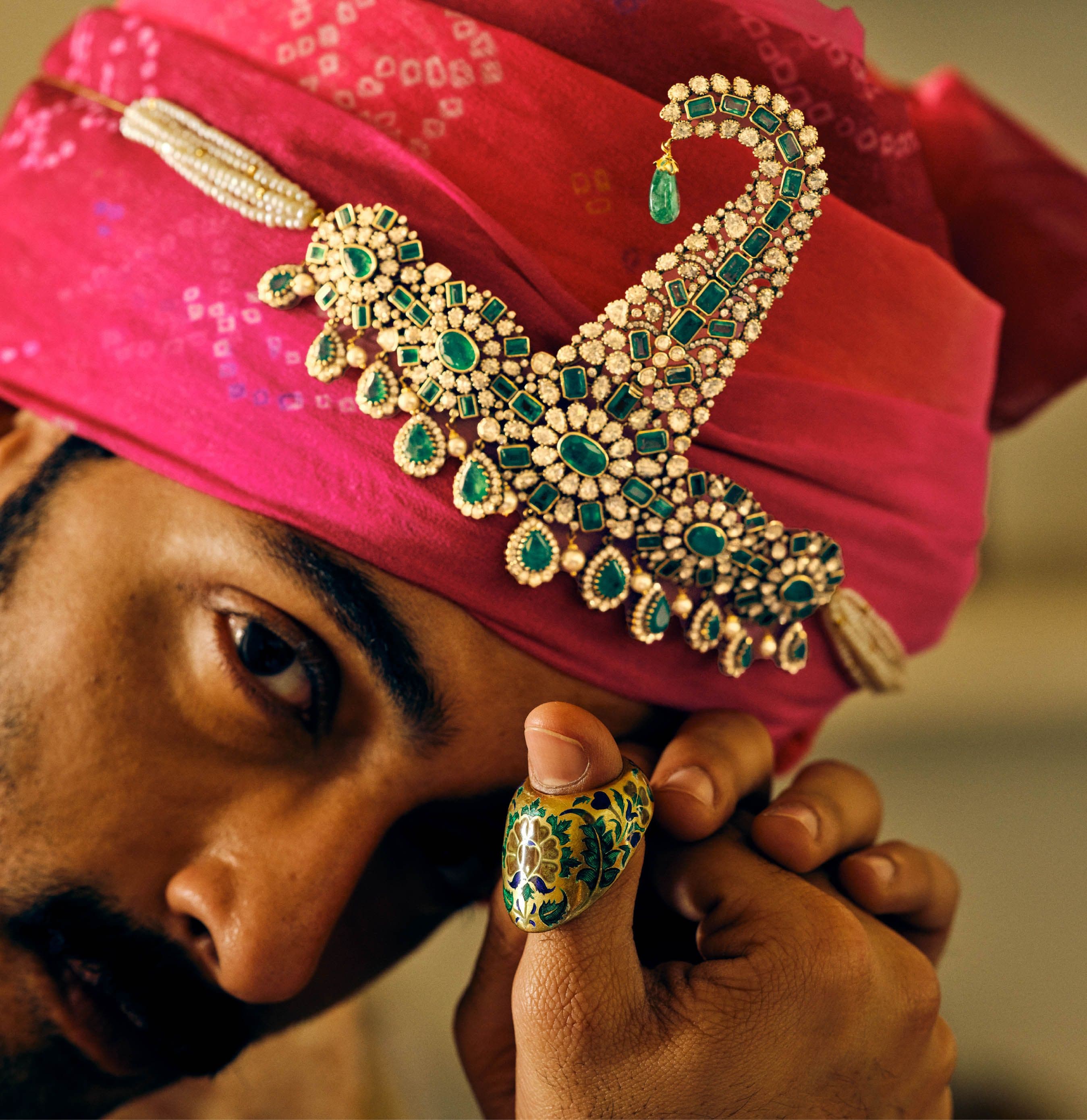
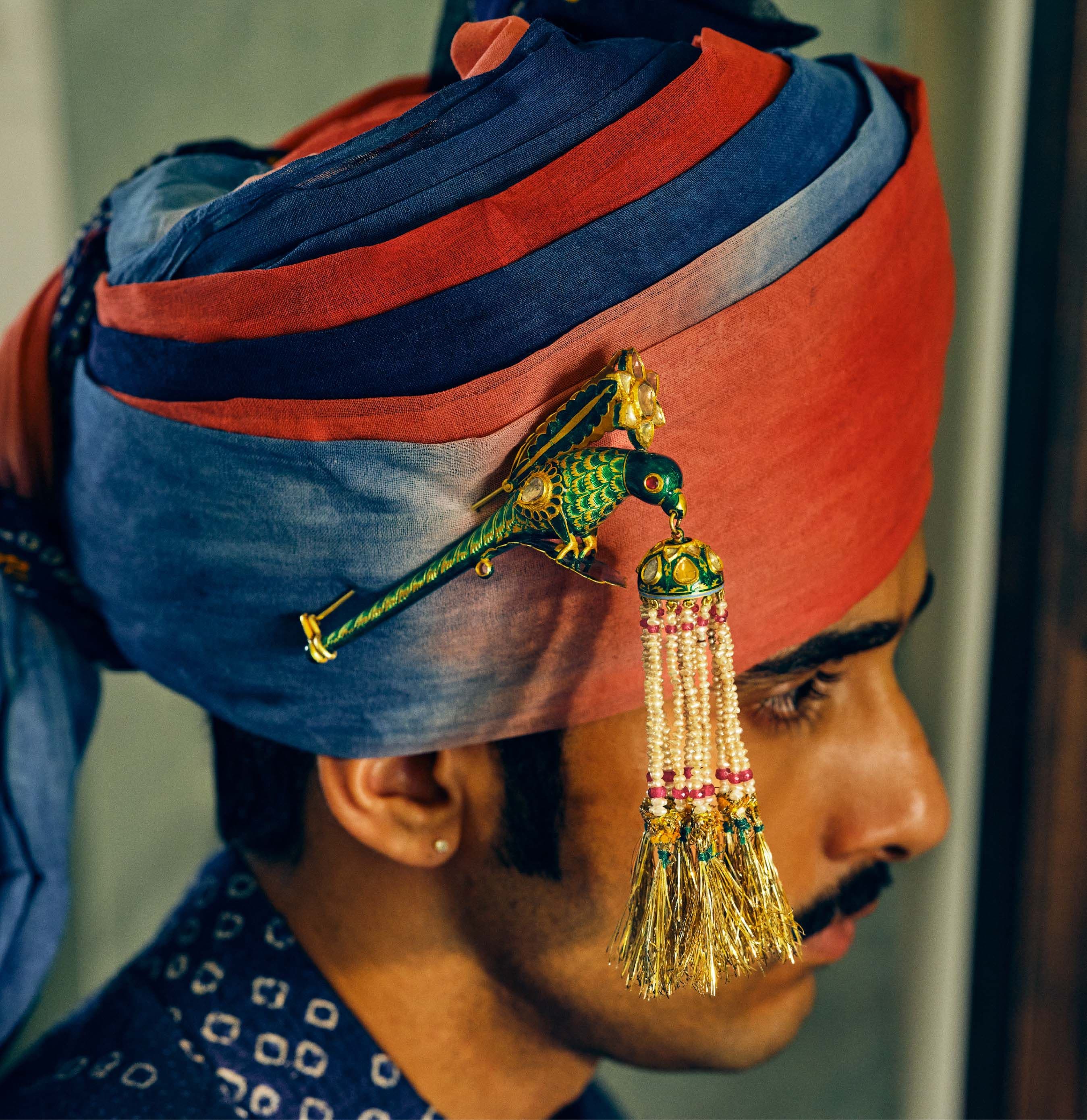
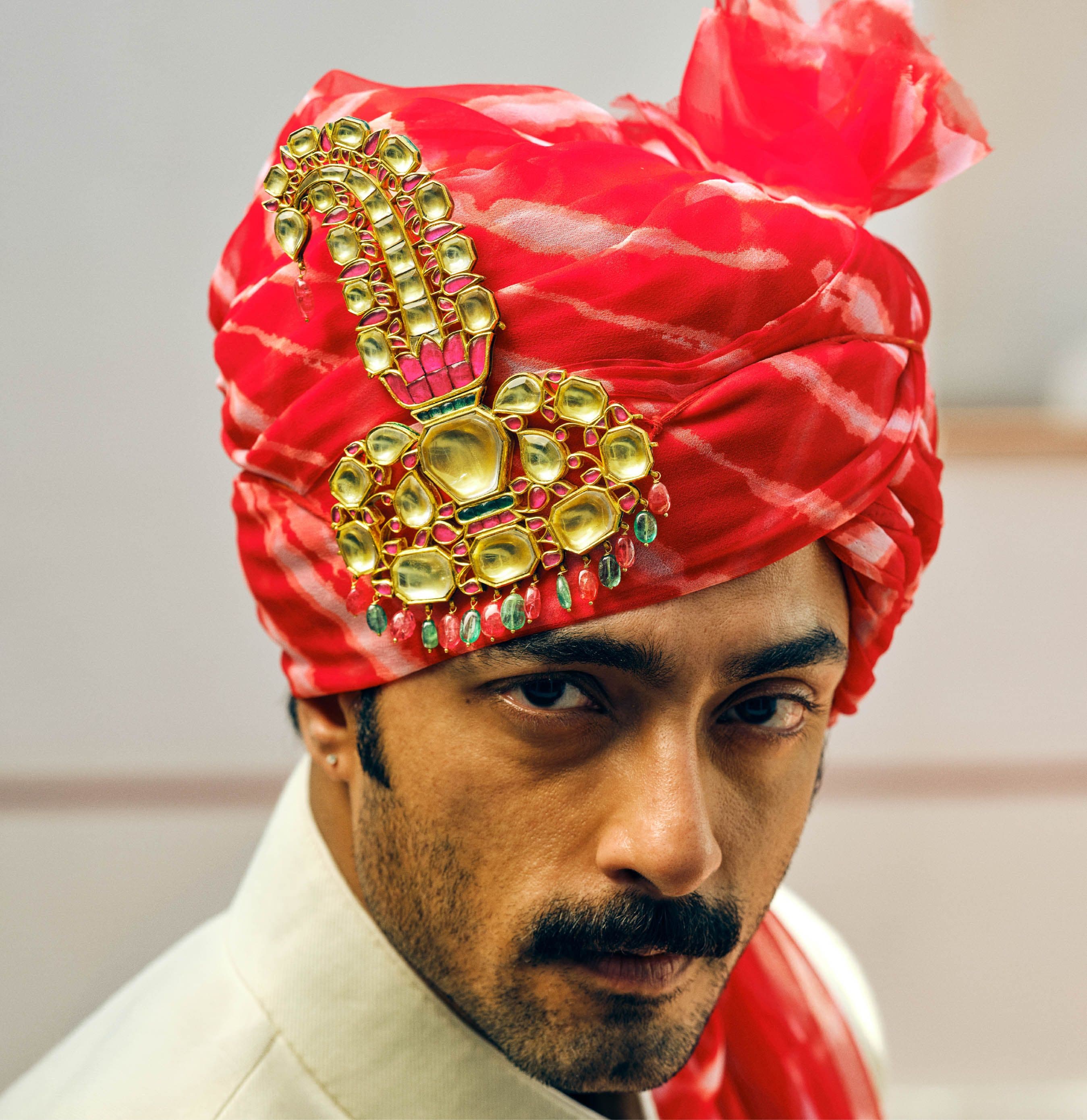
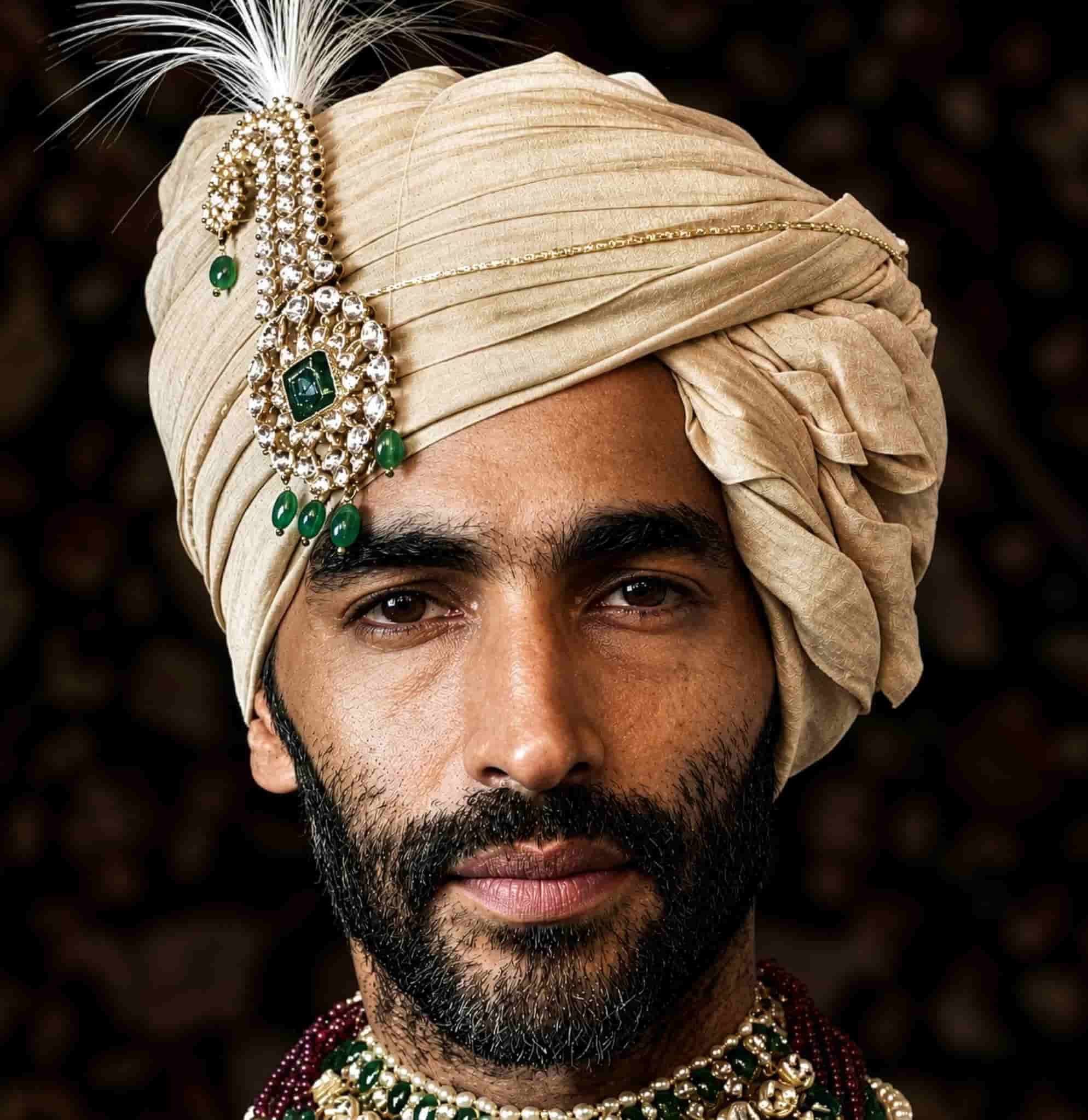
In Traditional Jewellery of India (1997), Oppi Untracht names the chief turban ornaments of the subcontinent: the sarpech, the kalgi, the sarpatti and the turra. Under Mughal sumptuary laws, he records, these could be worn only by royalty, blood relatives of a chief, and honoured individuals.
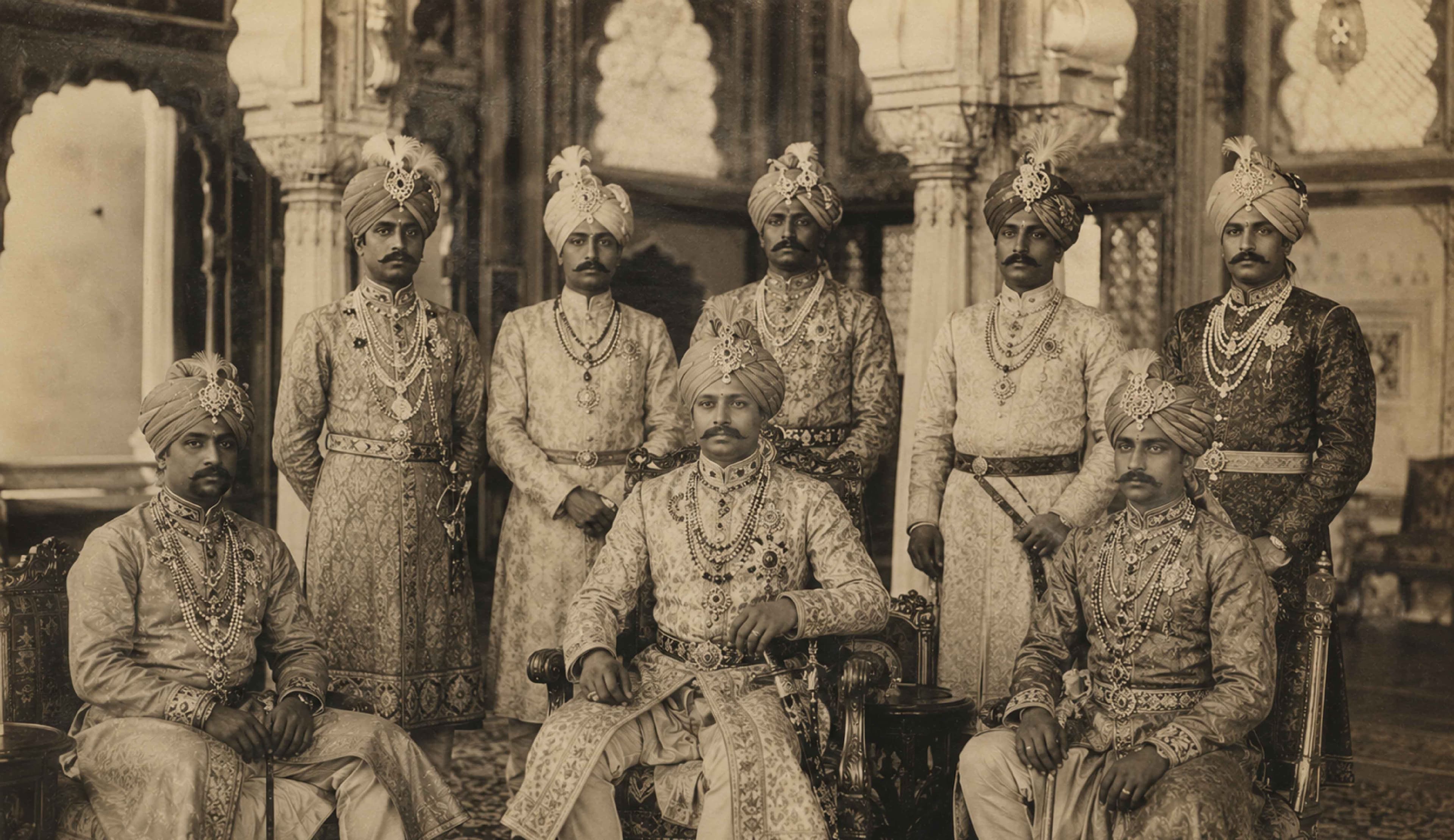
Royal Male Adornment in Rajasthan
The form may have originated with plumed devices worn by Emperor Akbar in the 1590s, notes the Fine Arts Museums of San Francisco in its catalogue text on the maharajas' jewels. European aigrettes, hat jewels set with heron or egret feathers, may have shaped it from the early seventeenth century onward; in English the sarpech is still described, plainly, as a turban ornament. For generations it remained the emperor's jewel, given to favoured princes and courtiers only in exceptional circumstances.
As Mughal authority loosened in the eighteenth century, the emblem travelled outward. The Victoria and Albert Museum records that regional rulers took this mark of royalty for themselves. In Marwar, the Rathor court made it a signature: in a durbar painting of about 1750 to 1760, on loan to the Metropolitan Museum of Art, the noblemen display sarpech ornaments with a large golden sunburst disk, a device unique to the Rathor clan, claiming descent from the sun god Surya. In Jaipur, the palace workshops made the jewels themselves. The V&A holds an enamelled gold jigha of the eighteenth century, from a group of royal turban ornaments once in the collection of the Maharaja of Jaipur (IM.44-1922), along with two turban-jewel designs from a series of Jaipur jewellery designs dated 1797 (IS.363-1992 and IS.364-1992).
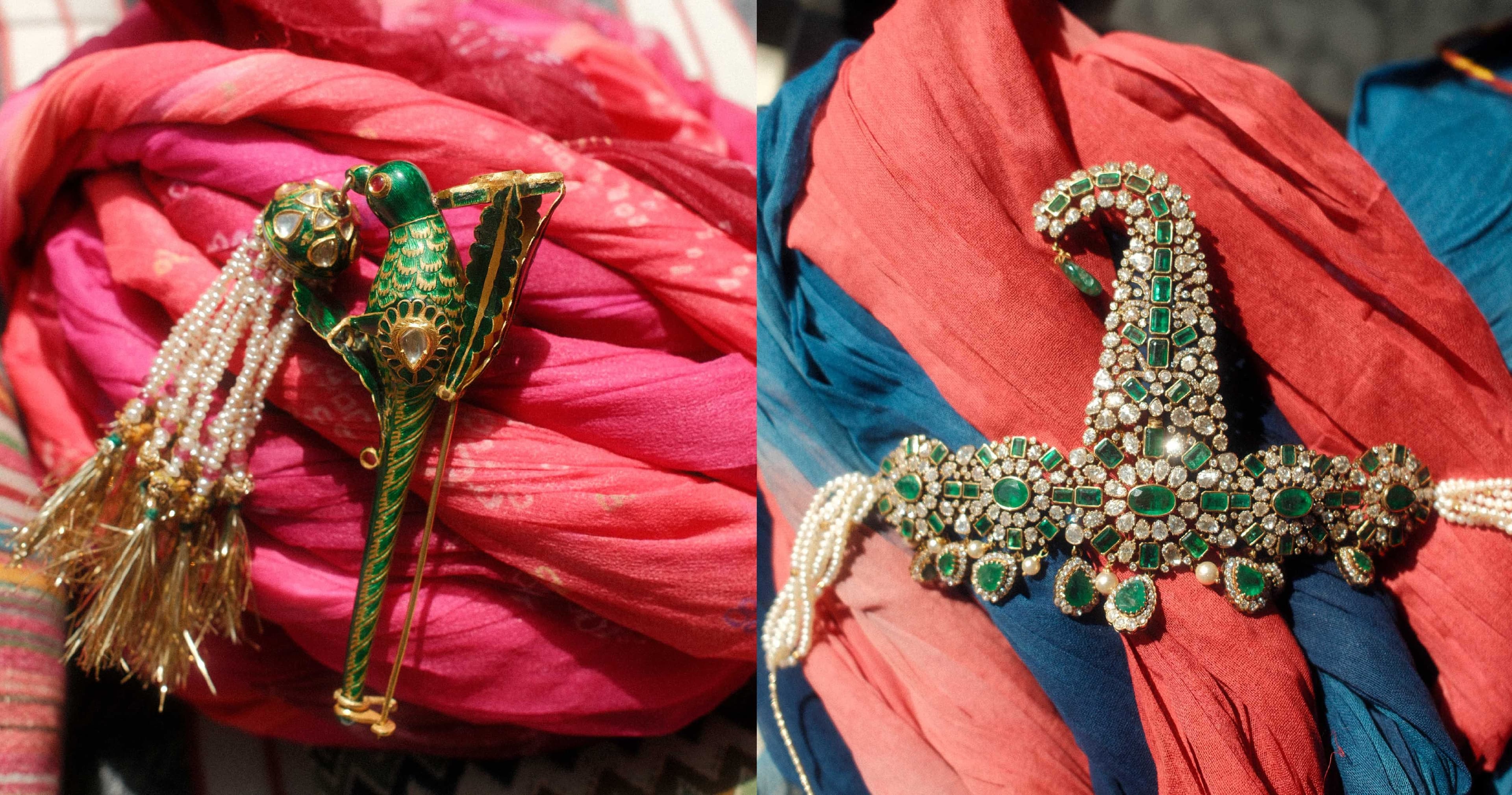
Grooms Jewellery
At an Indian wedding the groom's jewels form a small, deliberate set. Each piece holds its own station; none of them needs to shout.
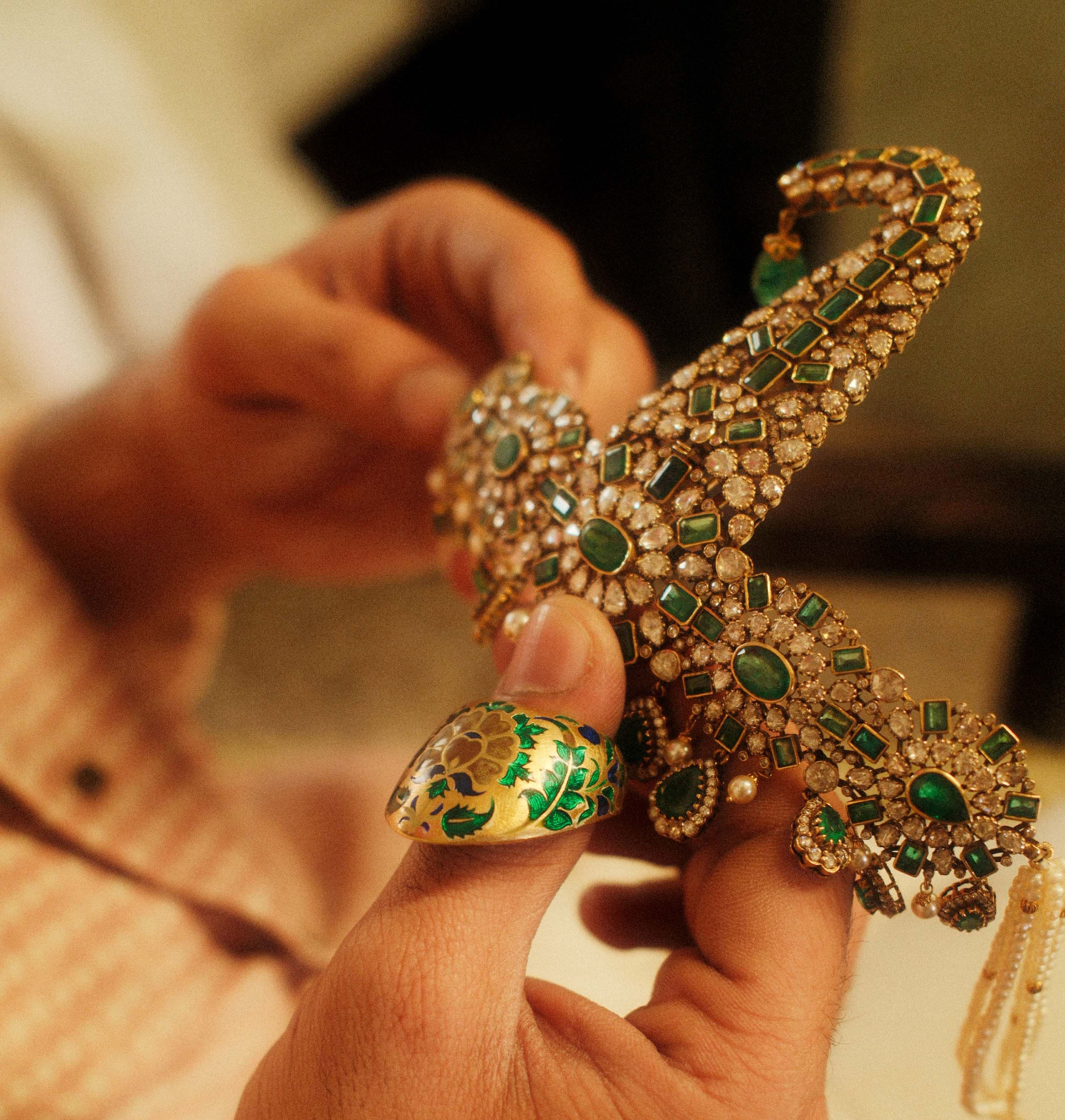
Sarpech
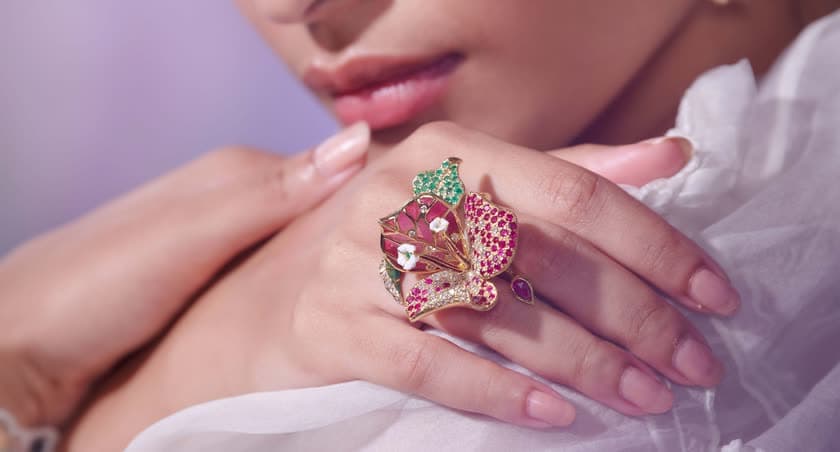
The front jewel and the most architectural of the set, rising from a single spray to three. The House of Sunita Shekhawat builds it the old way: gold framework, jadau-set polki, meenakari across the curved reverse. The Men's Jewellery collection carries an elaborate sarpech head ornament among its centrepieces. It is the first piece to decide; everything else takes its scale from it.
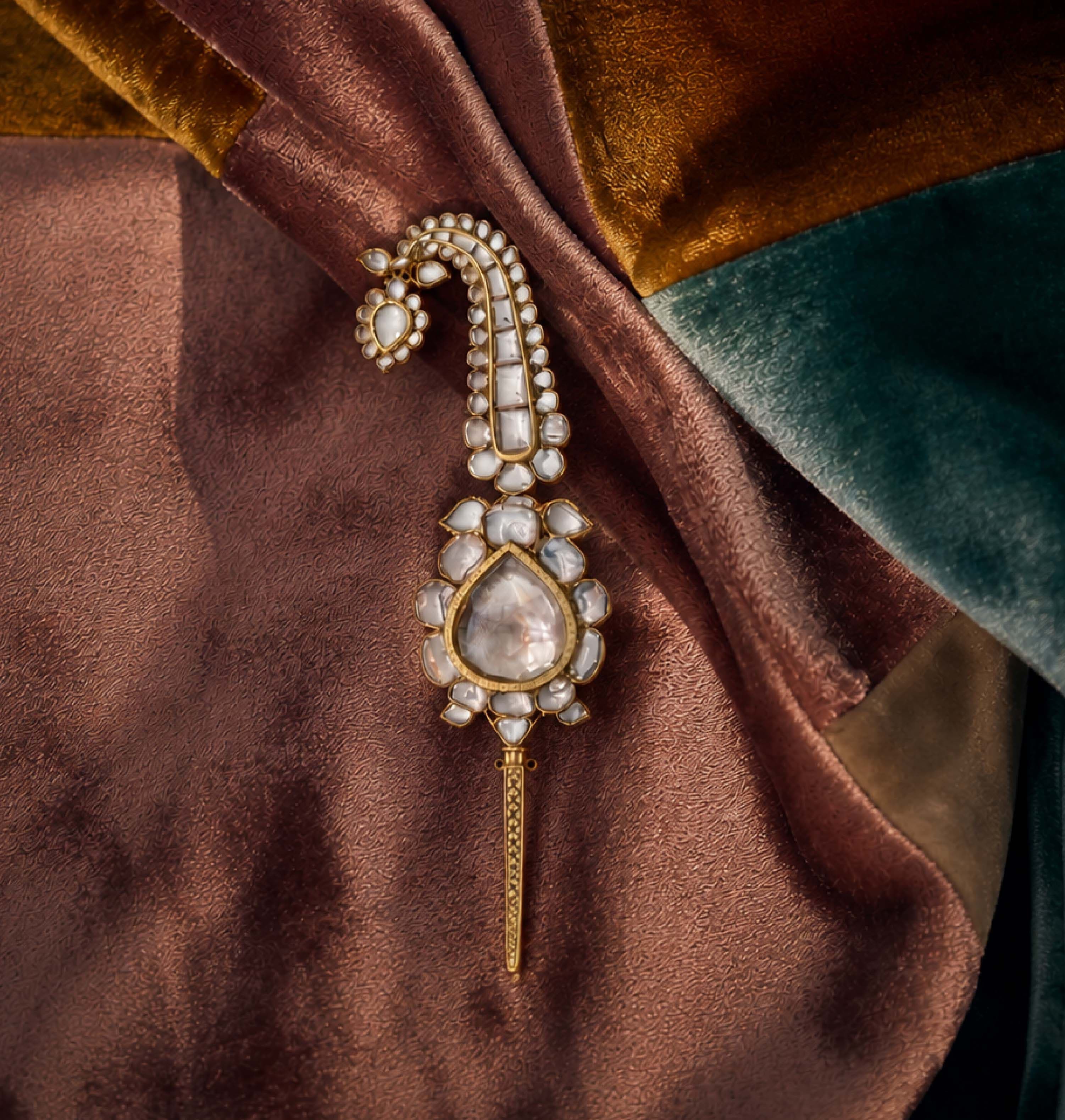
Kalgi
The crest of the safa. A jewelled mount holds the plume upright; in the oldest pieces the feather itself was the treasure, one gathered from each wing of the heron. In the ateliers it is made in gold, the mount set with polki in kundan. At a daytime baraat it can be the only jewel the groom wears.
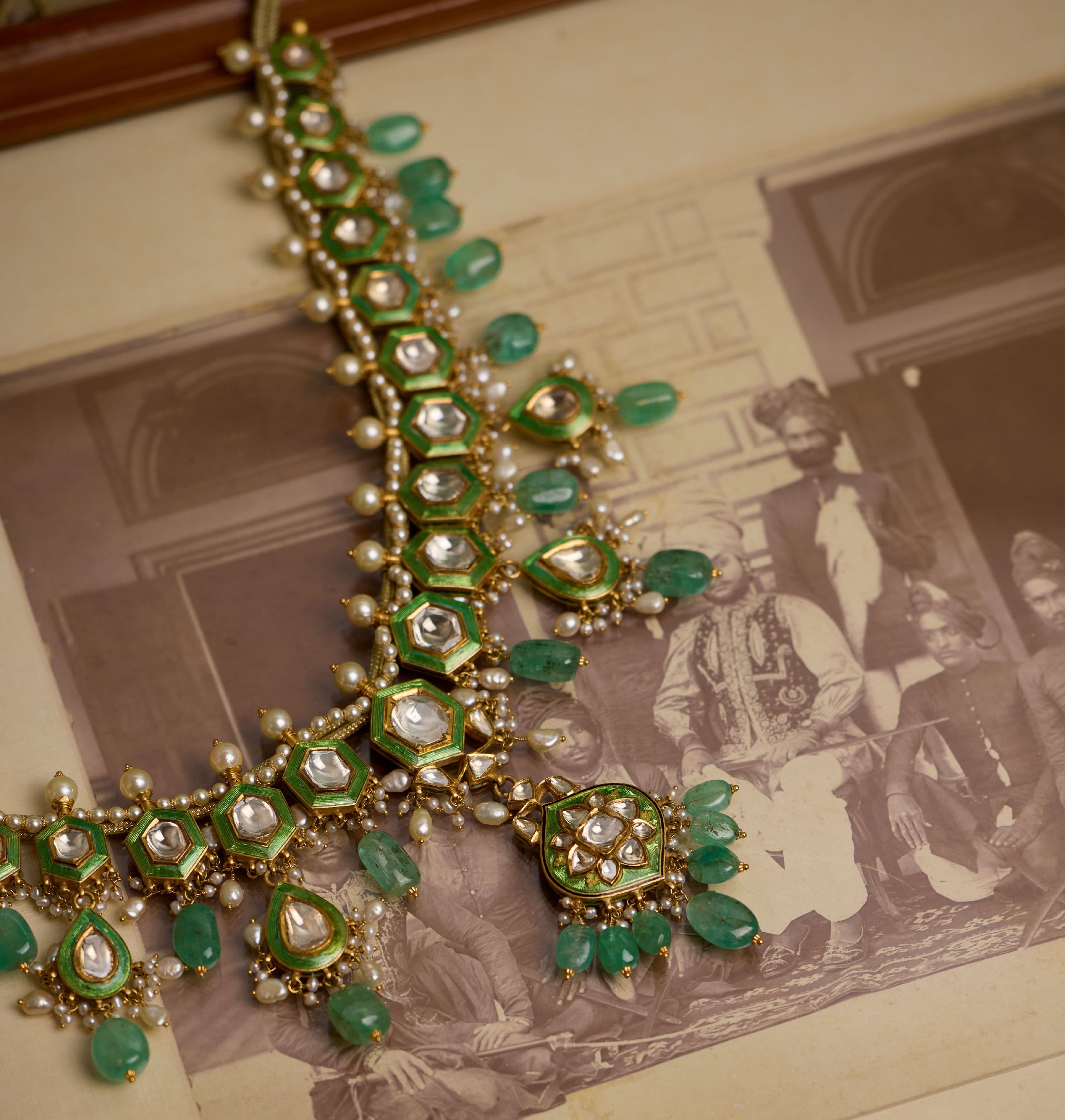
Haar
A strand of the finest emeralds, worn at the chest. Where the sarpech is architecture, the haar is colour, answering the bride's own polki suite without competing with it. It is the piece most often chosen together, groom and bride at one table.
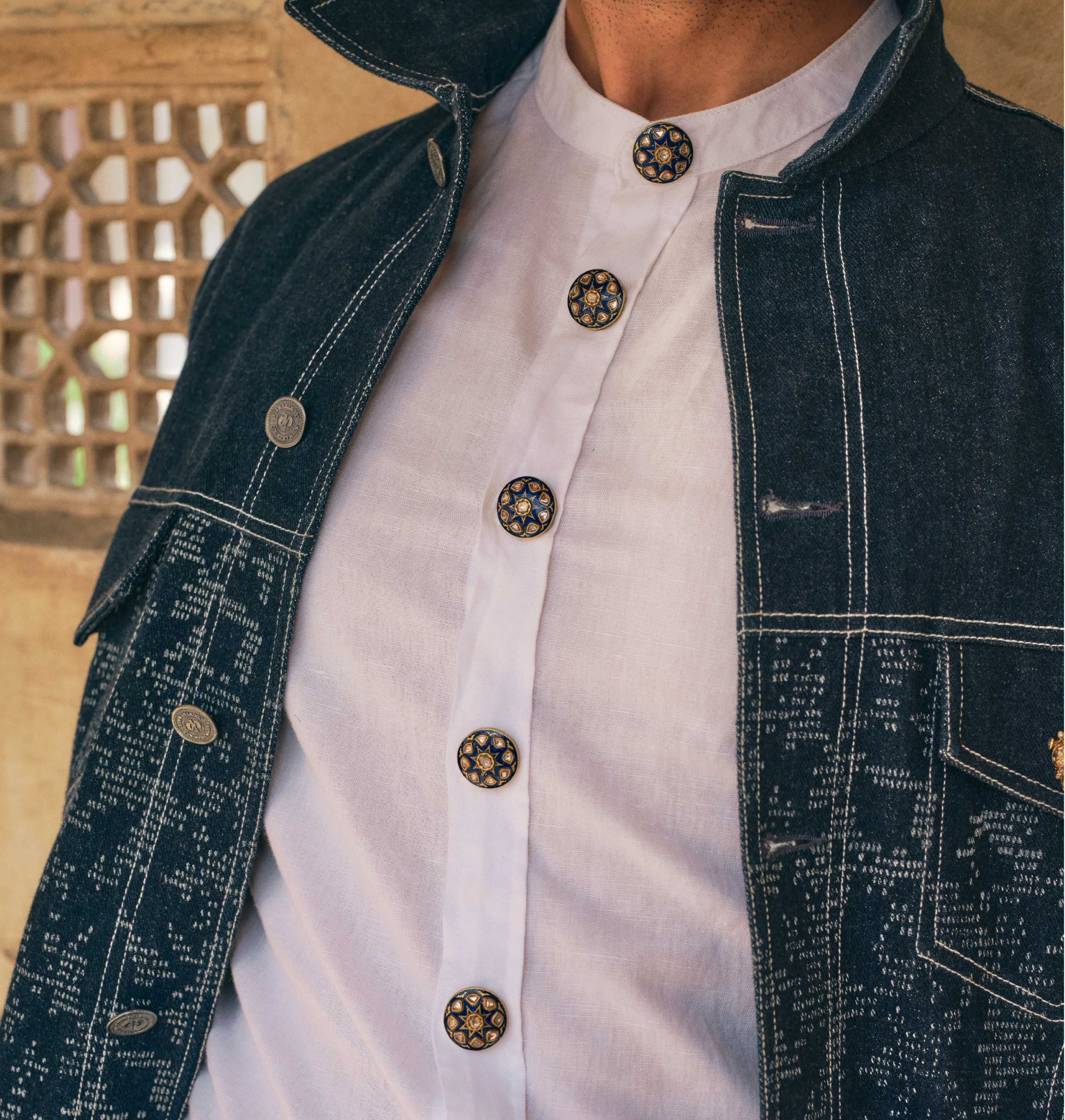
Buttons
Made for the Jodhpuri bandhgala: small gold jewels, sometimes enamelled, that pass quietly from father to son. The most understated pieces a man will own, and often the longest kept. For a smaller ceremony, they may be jewel enough.
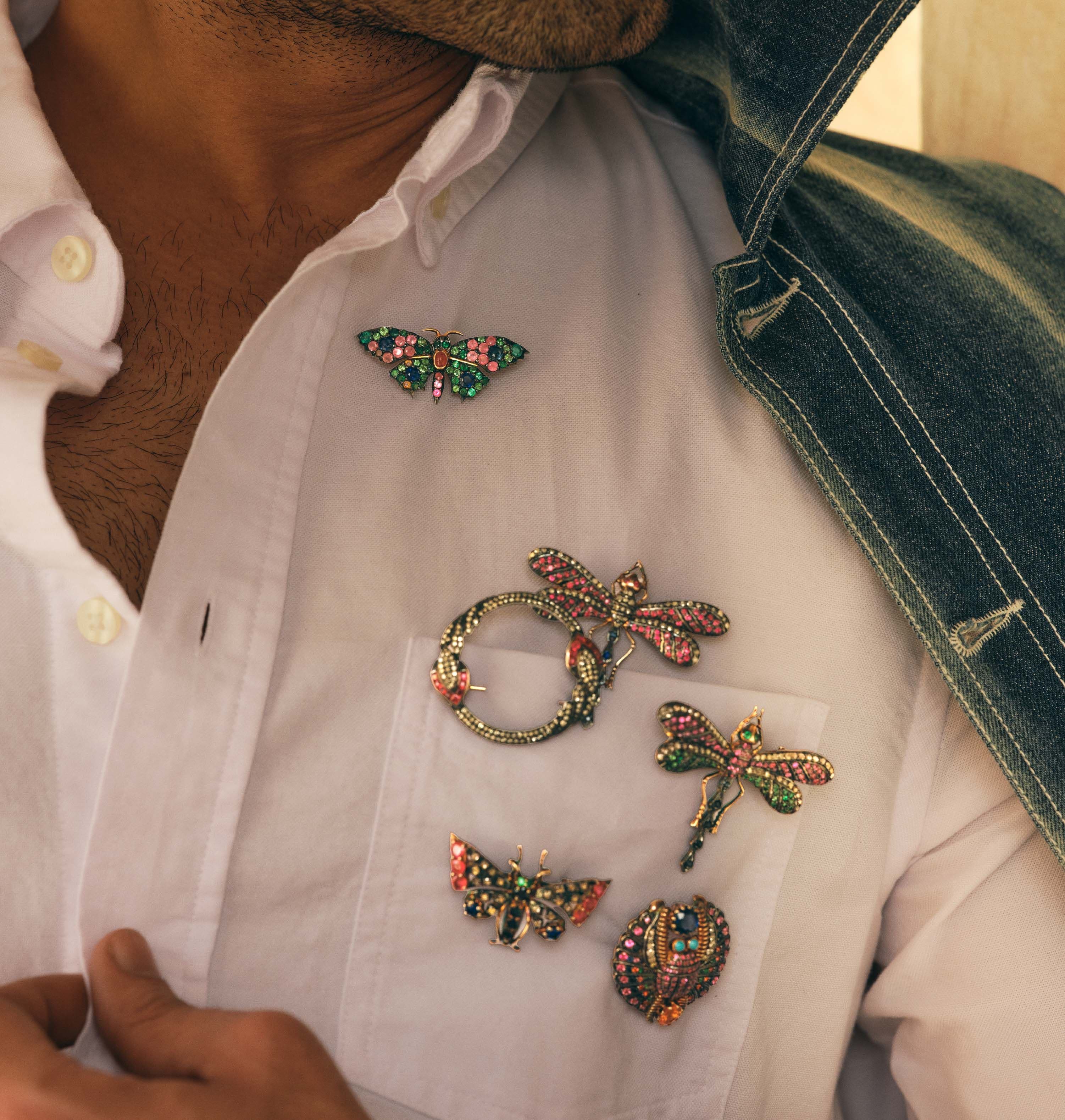
Brooch
A brooch was more than a decorative accessory—it completed the royal ensemble with understated elegance. Worn on the sherwani or achkan, these finely crafted ornaments showcased exquisite gemstones and craftsmanship, reflecting the groom's prestige, individuality, and timeless sense of refinement.
Crafting the Sarpech
Three words are often confused, and the House teaches them plainly: polki names the stone, kundan names the gold, jadau names the craft of embedding.
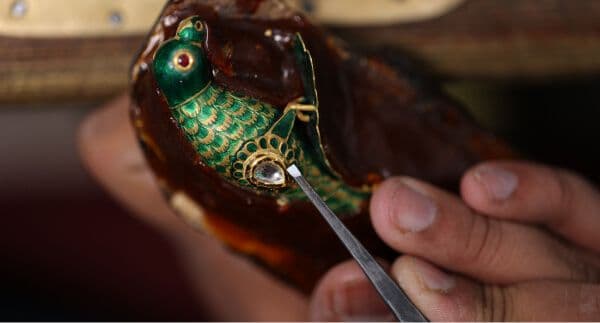
Polki is the diamond left close to its natural state, minimally faceted — often left entirely unfaceted, or worked with only a few facets — where a modern round brilliant carries fifty-seven or fifty-eight. Kundan is the very thin foil of twenty-four-karat gold burnished around each stone to set it. Jadau, the embedding itself, is the oldest form of jewellery made and worn in India, believed to have originated in the royal courts of Rajasthan and Gujarat. The setting uses no prongs. The foil is pressed around the stone, and the artisans work it with fine implements of wood and bone until stone and gold sit as one surface. Jaipur's jeweller families trace to 1727, when Sawai Jai Singh II founded the city and invited them to make jewellery for the royals of Rajasthan. On a sarpech, enamel comes first. The kiln's heat can soften twenty-four-karat gold or loosen a set stone, so the meenakari is completed before a single polki is placed. Then the reverse. In November 1875, Sajjan Singh, Maharana of Udaipur, presented a sarpech to the Prince of Wales, later Edward VII; the Royal Collection Trust records its back enamelled in red, green, white and blue with flowers and peacocks. A reverse finished as carefully as the front is the old mark of the real thing. Because a sarpech is a curved jewel, the House finishes its reverse in meenakari for the same reason: not so the piece can be worn both ways, for it cannot, but because a jewel is only complete when the side no one inspects is beautiful.
Wearing the Kalgi Today
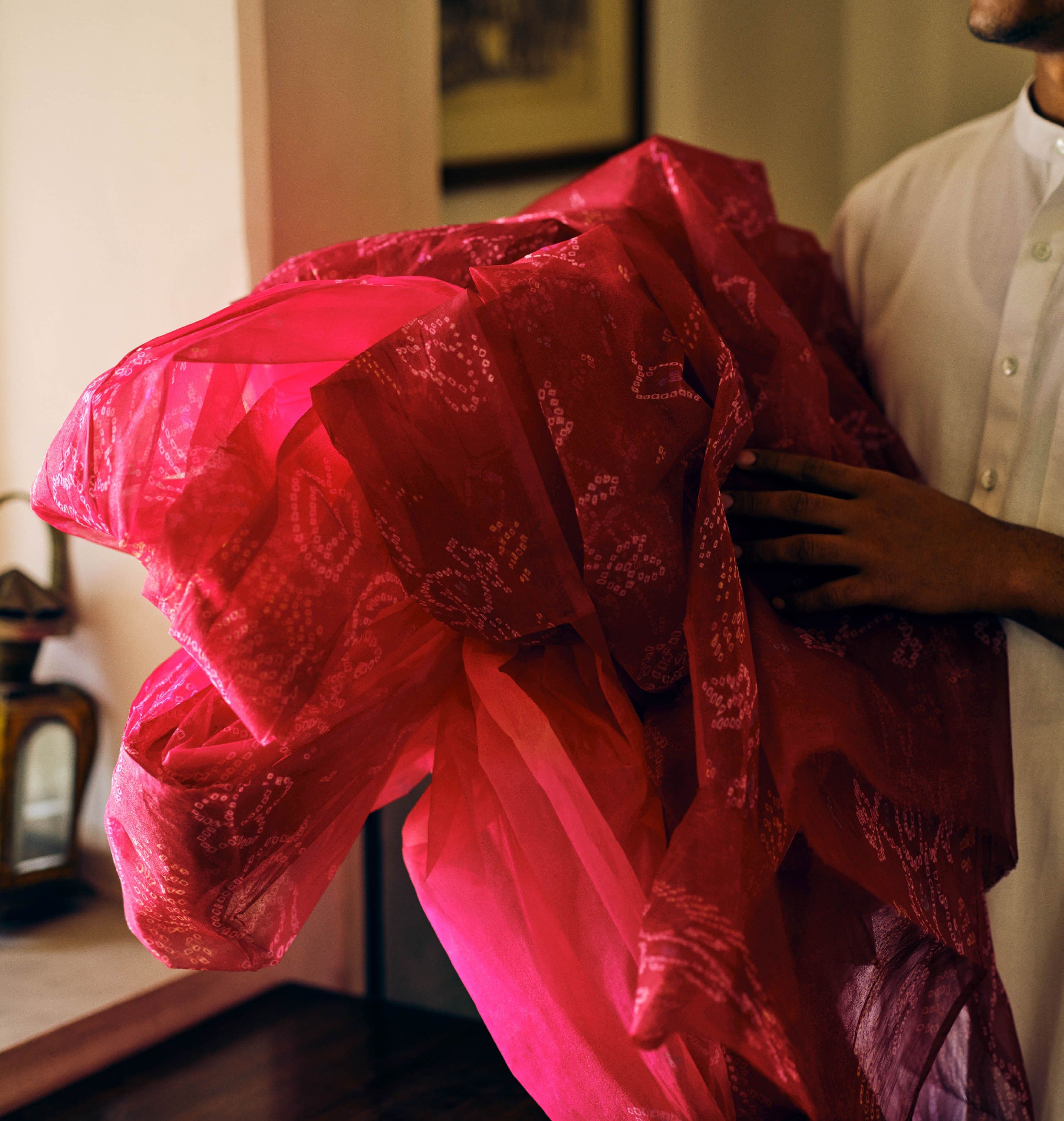
In the practice of the House, the safa is tied first, and tied on the head itself, so the fit is the wearer's own; only once the shape has settled is the jewel pinned through the outer folds. The historical pieces show how: the V&A's jade turban ornament of 1700 to 1750 carries a ring for the feather plume and a stem that fitted into the turban.
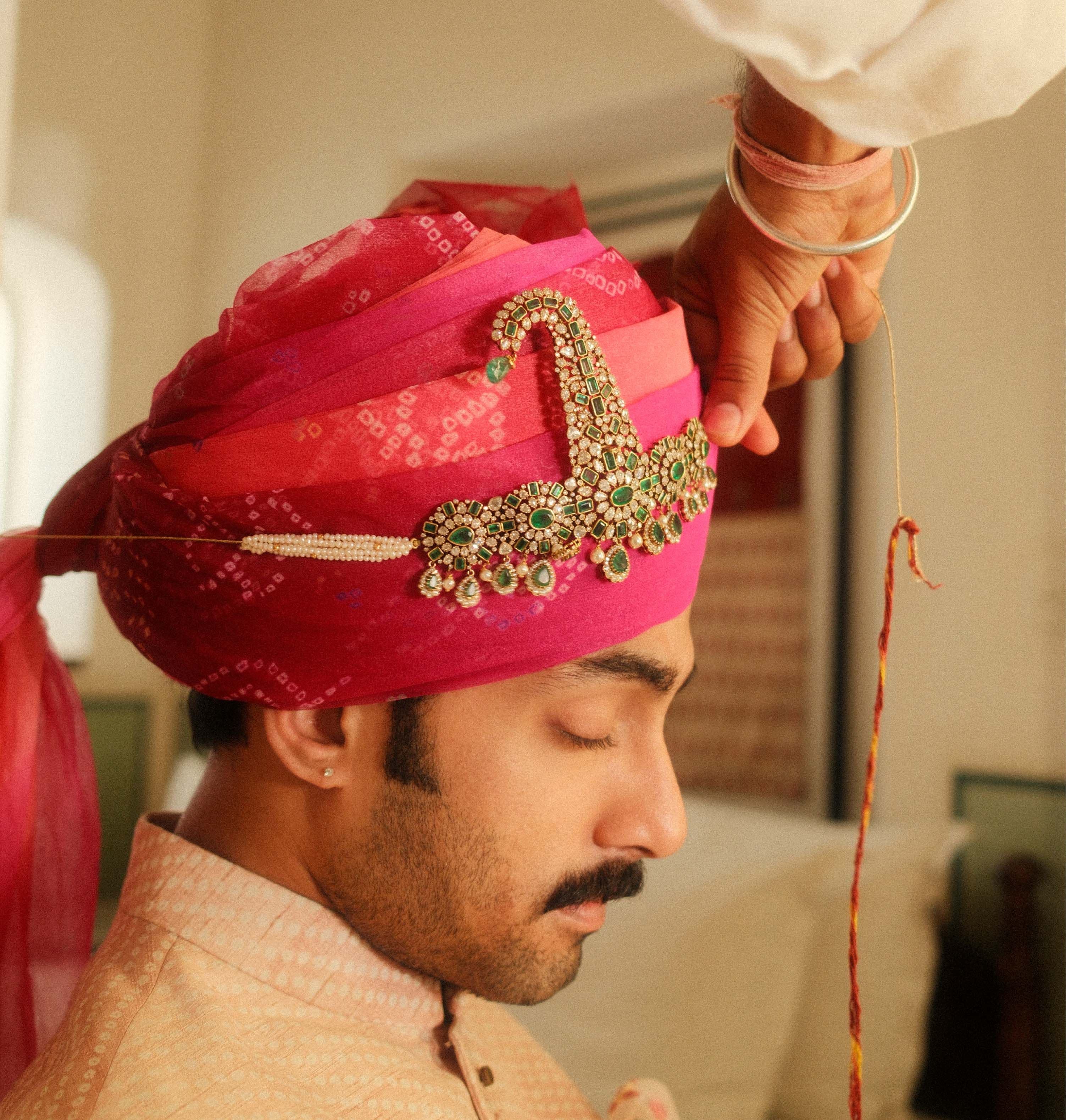
Placement follows convention rather than rule. Tradition, per Untracht, put the sarpech at the front or the side, and the turra at the side; the jigha rose as the plume. A groom today may hold to that, or let the scale of the safa decide. The counsel of the House is restraint. The kalgi for the groom is chosen to the proportions of the safa and worn with nothing else at the head; the rest of the set, the haar, the buttons, can carry the colour. The jewel at the brow should be the stillest thing in the room.
The Modern Maharaja
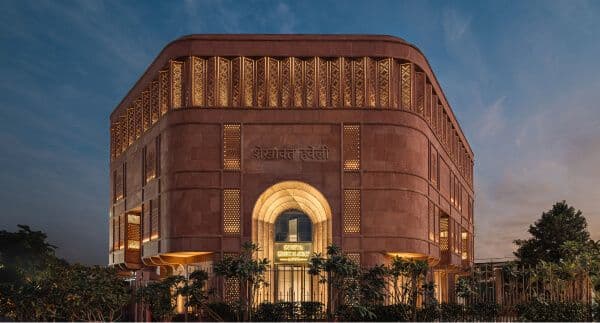
The Men's collection of the House carries a single line above it: Reviving Tradition, Inspiring the Modern Maharaja. It is not nostalgia. Maharaja jewellery is a tradition the House has held since 1996: in 2010 it made bespoke jewellery for the Jodhpur royal wedding of Yuvraj Shivraj Singh and Gayatri Kumari Pal, and the commission included a sarpech. A groom's piece follows the same path as any high jewel of the House: framework, engraving, enamelling and the setting of stones, the enamel always fired before a stone is placed, in the hands of specialist karigars. Commissions of this order ask for at least ninety days, so the right time to begin is when the wedding date is set. Consultations are arranged by appointment at the boutiques in Jaipur and New Delhi.
Frequently Asked Questions
People also ask.
A sarpech is a jewelled ornament fastened to the front of the turban. The name joins sar, meaning head or front, with pech, meaning screw. In the Mughal and Rajput courts it was a symbol of rank; at an Indian wedding today it is worn by the groom on the safa.
A kalgi is a turban ornament that carries a feather plume above a jewelled mount. The traditional kalgi held black heron feathers with stems bound in gold and silver wire. Once reserved for royalty and honoured members of court, it is now most often seen on the groom.
For centuries the kalgi belonged to royalty and those a court chose to honour, a feather plume above a jewelled mount. The groom wears that same mark of honour on his wedding day, pinned to the safa once it is tied.
Historically, enamelled gold set with gemstones. The Isabella Stewart Gardner Museum notes that larger North Indian examples tend to be enamelled gold set with gems in interlocking parts; its own sarpech is carved white nephrite jade. At the House, a sarpech is made in gold, set with polki in the jadau manner, and finished with meenakari.
At the front of the turban by long convention, or at the side; the turra sits at the side. Historic pieces carry a stem or ring at the back: the stem slipped into the folds of the turban, and the ring held the feather plume. Today the ornament is pinned to the safa after it is tied.
It depends on the setting. A jadau sarpech carries polki, diamonds left close to their natural state, set in kundan, in the manner of the royal courts. A modern setting may carry cut diamonds with coloured gemstones, as on the Udaipur sarpech of 1875, which combines emeralds and pearls alongside the diamonds.
Commissions of this order ask for at least ninety days. A sarpech passes through framework, engraving, enamelling and the setting of stones, the enamel fired before a stone is set, each stage in the hands of a specialist karigar. Consultations are arranged by appointment at the boutiques in Jaipur and New Delhi.