
The Art of Craft and Design
At Sunita Shekhawat, we believe that craft is a window into the history of civilisation. Our work is dedicated to preserving old-world charm and age-old skills with a touch of modernisation. Each piece celebrates traditional skills through detailed craftsmanship. Handmade and craft-led, each piece of jewellery takes countless hours to complete.
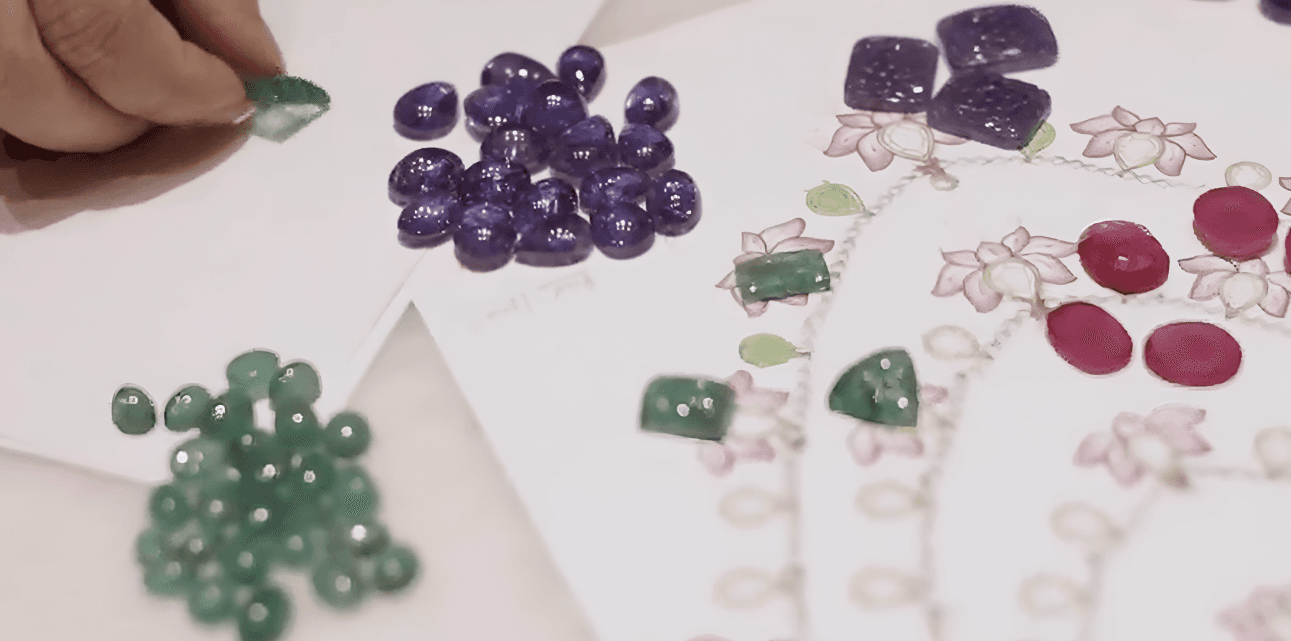
Design language at our atelier is more than simply embodying traditional skills or reinventing them in a contemporary format. Design, for us, is a storytelling medium—connecting our patrons to traditional craft and contemporary design through modern heirlooms. Inspired by travels, flora, fauna, architecture, and everything design, each creation is a manifestation of precious gemstones and meticulous skill.

From Flux to Fire
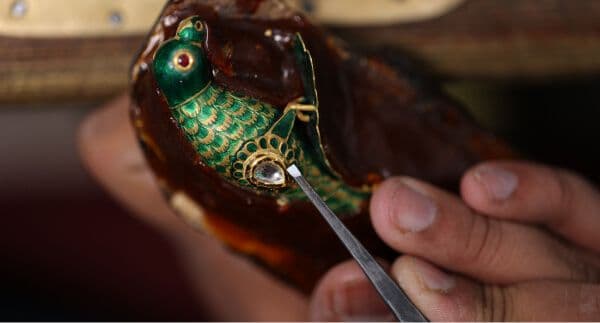
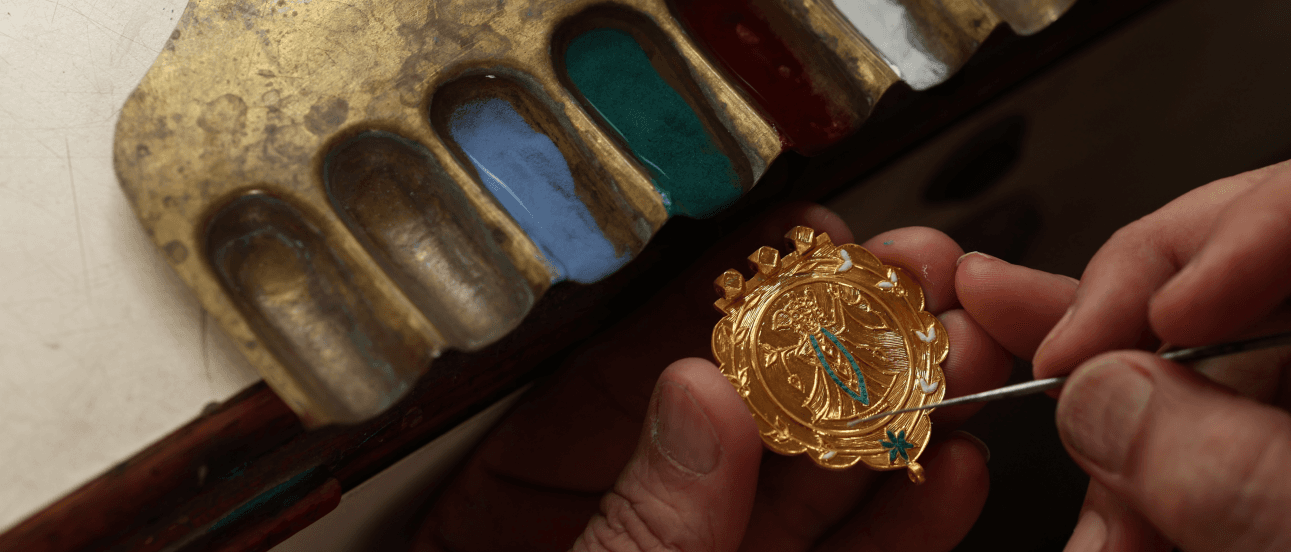
Enamelling is where art meets science: a centuries-old craft that transforms raw materials into vibrant expressions of beauty. At its core, it is the fusion of glass to metal at high temperatures a delicate dance requiring precision and creativity. The process begins with flux, a clear, colourless glass created from silica, soda, lime, and borax. Adding metal oxides transforms this humble mixture into a kaleidoscope of colours, from brilliant reds to ethereal blues, ranging in opacity from transparent to opaque.
Each hue is a masterpiece, achieved through countless applications and firings. The enamelist must possess an almost alchemical knowledge—understanding the perfect blend of glass powders and oxides, the precise temperature of the kiln, and the exact timing needed to bring each colour to life. With each firing, the glass fuses to the metal, building depth and richness until the desired clarity and brilliance are achieved.
The versatility of enamel lies in its techniques. It can be painted like a delicate watercolour, layered into engraved recesses as in champlevé, or meticulously placed within thin wire compartments in cloisonné. In the mesmerising plique-à-jour style, the enamel is suspended without backing, allowing light to shine through like miniature stained glass. Each method demands precision, patience, and the skilled hand of an artisan.
Historically, enamel was not just an art but a trade tied to global commerce. The finest raw enamel glass came from Murano, an island near Venice renowned for its glassmaking. By the 17th century, these materials were brought to India by Portuguese traders to the Mughal courts. Sir Thomas Roe, a British envoy, noted in his diary that red enamel fetched forty-five shillings an ounce, while blue, white, and green were valued at eighteen shillings. These prized materials became the lifeblood of Mughal jewellery, blending European influences with Indian artistry.
In gemstone-set pieces, timing is everything. Enamelling must be completed before the stones are set, as the intense heat of the kiln can soften 24-carat gold or loosen the gemstones. This intricate choreography between materials and craftsmanship underscores the enchantment of this art form.
Enamelling is more than a process—it is a legacy. Each piece tells a story, preserving centuries of tradition while dazzling with modern brilliance. The result is jewellery that doesn’t just adorn but captivates: a true testament to the enduring magic of this ancient craft.
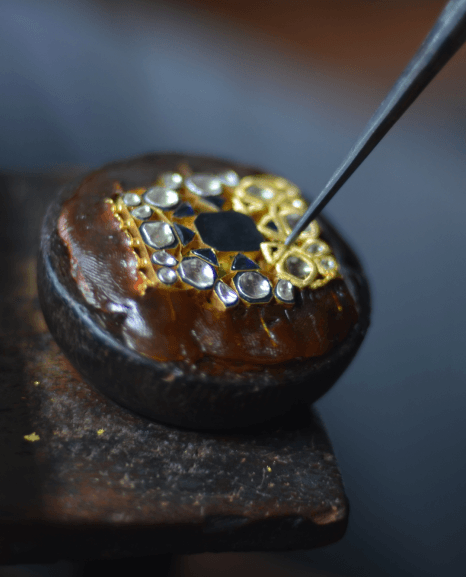
Polki is the diamond in its most natural state, uncut and unfaceted, kept as the stone emerged from the earth. Unlike a brilliant-cut diamond, a polki stone keeps the irregular character it formed with, so no two are alike. In the Mughal workshops of Rajasthan, polki became the heart of royal jewellery, set flush into gold so the stone appears to float on the surface. The house sets polki in its Heritage and bridal pieces, pairing the diamond's soft, watery glow with meenakari enamel on the reverse, so a necklace is finished as carefully on the side that touches the skin as on the side the world sees.
Jadau, from the Hindi jad, to embed, is the technique that holds traditional Indian jewellery together without prongs. Each gemstone is set over a core of lac into softened gold, worked around the stone by hand, and sealed with fine kundan foil burnished into place. The method predates modern setting entirely: it arrived with the Mughal ateliers and has been passed from master to apprentice in Jaipur ever since. Because jadau work is done stone by stone, a single piece can pass through many hands over weeks. It is this patience that gives jadau jewellery its unmistakable depth, and it is the standard to which the house's traditional pieces are held.
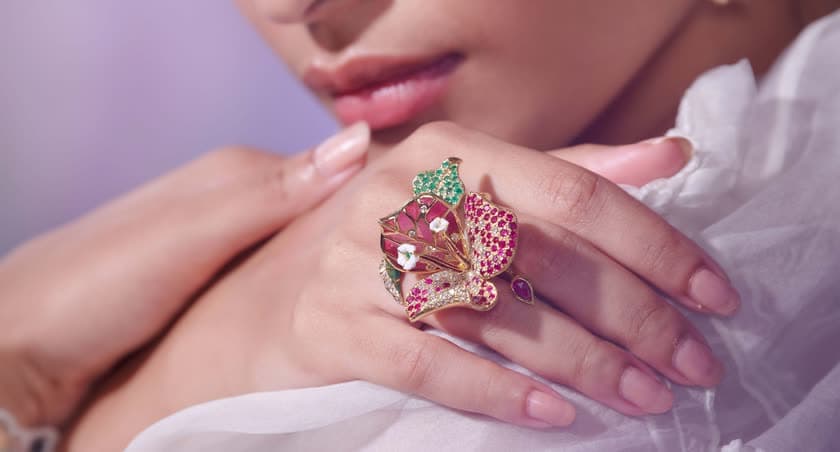
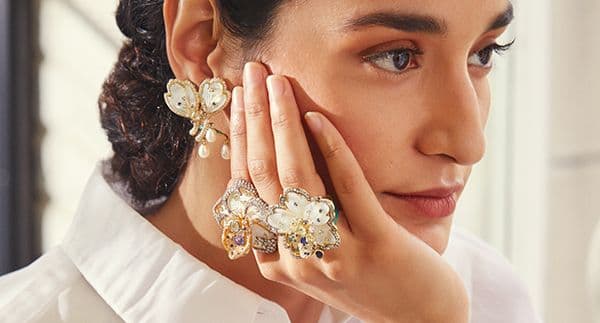
Explore the elegance of Sunita Shekhawat jewellery, where heritage craftsmanship meets contemporary artistry. Discover exquisitely handcrafted earrings that embody the essence of timeless luxury, seamlessly blending tradition with modern sophistication.
Uniquely Us
This captures the essence of Sunita Shekhawat’s jewellery, where each piece is meticulously crafted to embody unparalleled craftsmanship, timeless elegance, and a distinctive artistic vision.

Bespoke
Give a personalised touch to your heirlooms with our skilled craftsmen and innovative design, guided by Sunita Shekhawat’s devotion and attention to detail.

Ethically Sourced
From sourcing raw materials to the final display at our ateliers, we take into consideration our responsibility towards the environment.
Authenticity
Each Sunita Shekhawat piece comes with a certificate of authenticity and is eligible for repair, so you can shop with confidence.